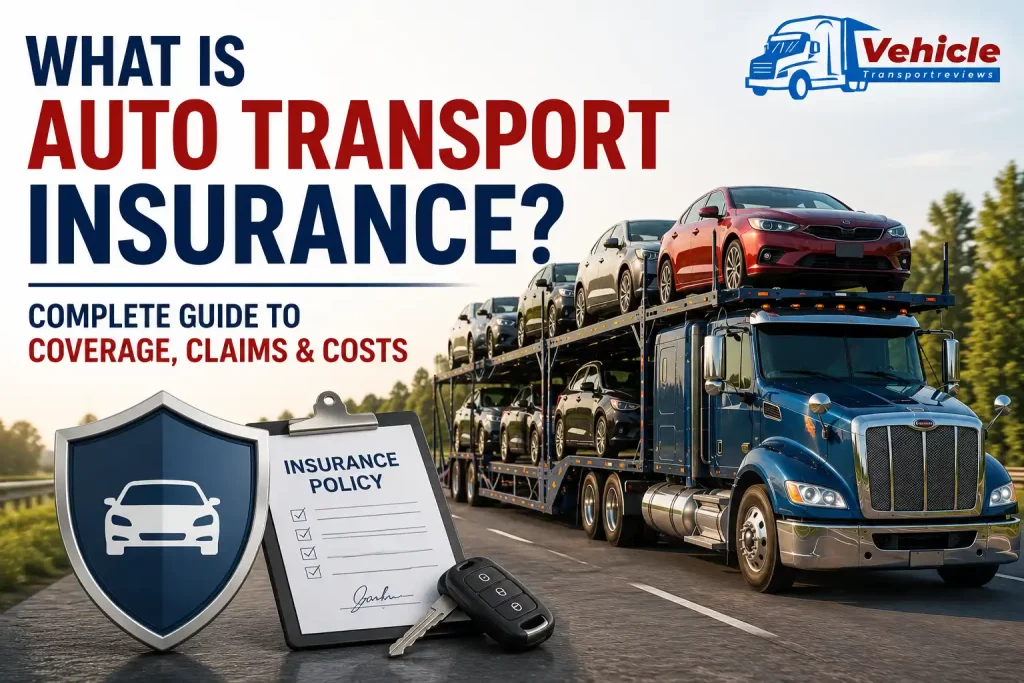
Your car is loaded onto a trailer and driven away. At that moment, your personal auto insurance usually stops being the main protection. The carrier’s insurance takes over. That coverage is called auto transport insurance.
This guide explains exactly what auto transport insurance is, what it protects, what it does not cover, and how to make sure you have the right coverage before your vehicle leaves. The information is based on current 2026 industry standards and real practices used by licensed carriers and brokers.
What is Auto Transport Insurance?
Auto transport insurance, also known as motor truck cargo insurance or carrier liability coverage, is the policy that protects your vehicle while it is in the care of a professional transporter. It covers damage that happens from the time the driver loads your car until it is safely unloaded at delivery.
This insurance is separate from your personal auto policy. Your own policy is usually secondary during transport. The carrier’s cargo insurance is the primary coverage you rely on. To understand the full shipping process, read our detailed guide on what is auto transport and how does it work.
Legal Requirements in 2026
Every FMCSA-licensed carrier must carry liability insurance. Most reputable carriers also maintain cargo insurance with limits between $100,000 and $250,000 per load for open transport, and $250,000 to $1,000,000 for enclosed transport. Brokers often require their carriers to meet these minimums.
What Does Auto Transport Insurance Typically Cover?
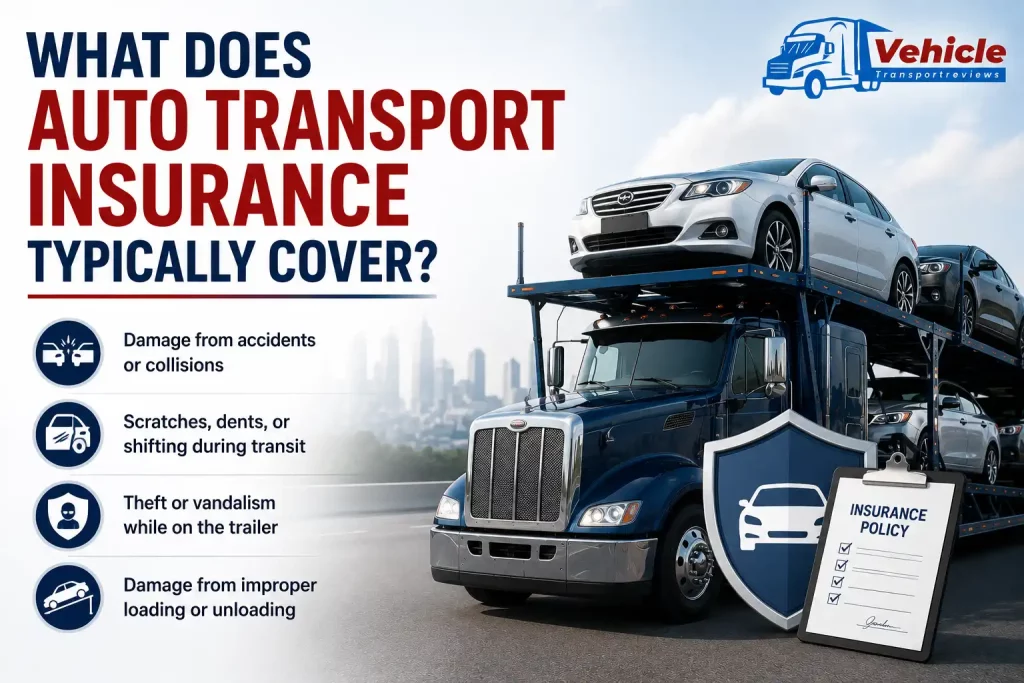
Auto transport insurance protects your vehicle from the moment the driver loads it until it is safely unloaded at delivery. It focuses on physical damage that happens while the car is in the carrier’s care.
Standard coverage usually includes:
- Damage from accidents or collisions caused by the driver
- Scratches, dents, or shifting during transit
- Theft or vandalism while the vehicle is on the trailer
- Damage from improper loading or unloading
Most open carriers carry between $100,000 and $250,000 per load. Enclosed carriers often provide higher limits, typically $250,000 to $1,000,000, because they handle more valuable vehicles.
Common Exclusions and Limitations
Auto transport insurance does not cover everything. Knowing the exclusions helps you avoid surprises.
Common exclusions include:
- Pre-existing damage that was already noted on the Bill of Lading at pickup
- Mechanical or electrical breakdowns not caused by the carrier
- Normal wear and tear during the journey
- Personal items left inside the vehicle
- Damage from “acts of God” such as severe hail, flooding, or earthquakes (unless you purchased extra coverage)
Always review the policy carefully. The Bill of Lading is the most important document because it records the vehicle’s condition before transport begins.
Understanding Deductibles and Coverage Limits
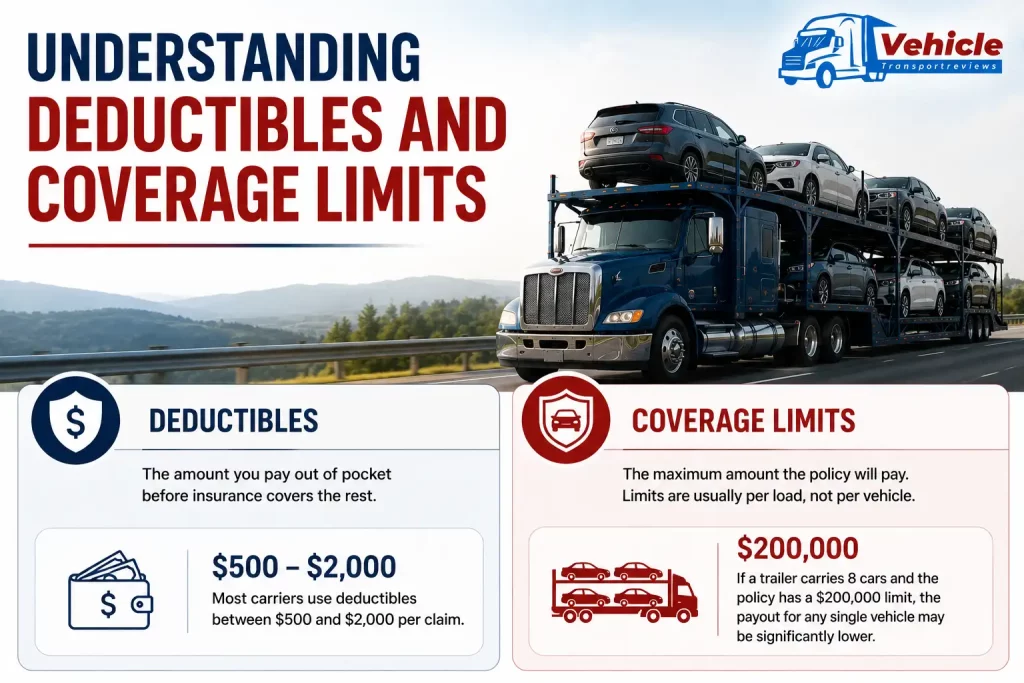
Deductibles are the amount you pay out of pocket before the insurance company covers the rest. In 2026, most carriers use deductibles between $500 and $2,000 per claim.
Coverage limits are the maximum amount the policy will pay. These limits are usually per load, not per vehicle. If a trailer carries eight cars and the policy has a $200,000 limit, the payout for any single vehicle may be significantly lower.
How to Verify a Carrier’s Insurance Before Shipping
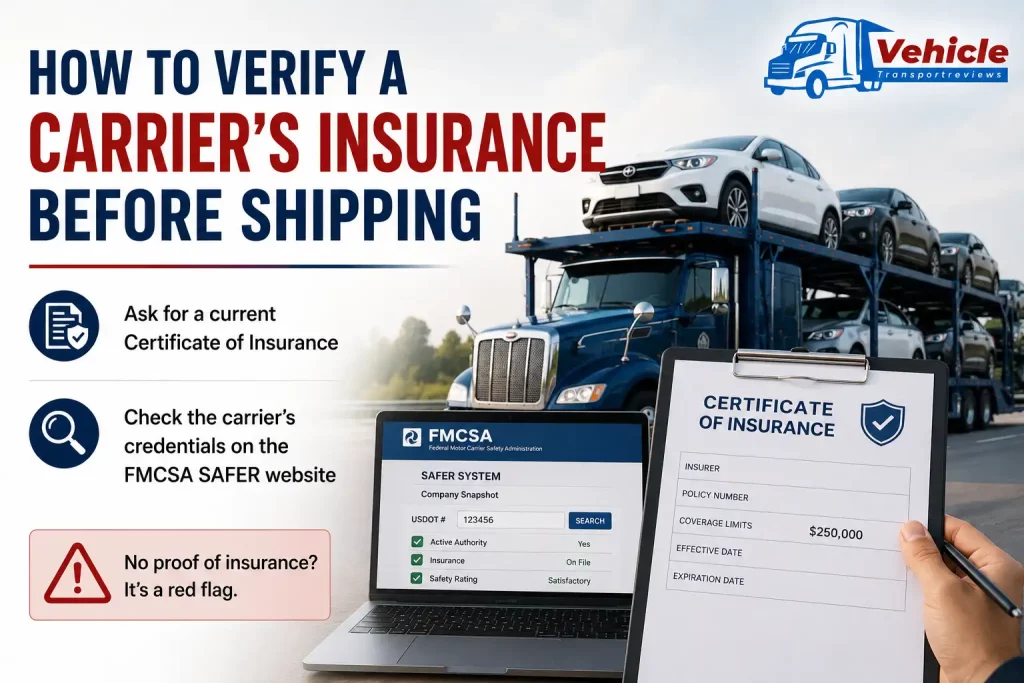
Never assume your vehicle is protected. Always verify insurance before you hand over the keys.
Ask the broker or carrier for a current Certificate of Insurance. This document shows the policy number, coverage limits, and effective dates. Legitimate companies provide this quickly.
You can also check the carrier’s credentials yourself on the FMCSA SAFER website using their USDOT or MC number. Look for active authority and valid insurance filings. If the company hesitates or cannot provide proof, consider it a red flag.
The Auto Transport Insurance Claims Process
If damage occurs, act quickly and follow these steps.
First, document everything at delivery. Note any new damage on the Bill of Lading before you sign. Take clear photos and videos from multiple angles. For extra protection during long hauls in extreme temperatures, many drivers also install one of the best dash cam for hot weather or a best dash cam with parking mode to record the entire journey.
Contact the carrier or broker within 24 to 48 hours. Most policies require written notice within 5 to 10 business days. Provide the Bill of Lading, photos, and any other supporting documents.
The carrier’s insurance company will investigate the claim. Valid claims are usually paid within 30 to 60 days after all paperwork is complete. Keep copies of every communication.
How Much Does Auto Transport Insurance Cost?
Basic cargo insurance is almost always included in the price you pay for shipping. Supplemental or higher-limit coverage is optional and costs roughly 1.5% to 2.5% of your vehicle’s declared value.For a $30,000 car, supplemental coverage might add $450 to $750 to the total shipping cost. High-value or enclosed shipments often include higher limits by default. If you want the full picture on shipping expenses, read our complete breakdown of how much does auto transport cost.
Frequently Asked Questions
Does my personal auto insurance cover my car during transport?
Usually not. Your personal policy is typically secondary or does not apply once the carrier takes possession. The carrier’s cargo insurance is the primary coverage during transit.
What is the minimum insurance a carrier must have?
Most reputable carriers carry at least $100,000 to $250,000 in cargo insurance per load for open transport. Enclosed carriers often carry $250,000 or more. Always ask for the exact limit before booking.
Will the insurance cover pre-existing damage?
No. Insurance only covers new damage that occurs while the vehicle is in the carrier’s care. That is why the inspection and Bill of Lading at pickup are so important.
How do I file a claim if my car is damaged?
Document the damage immediately at delivery, note it on the Bill of Lading, and contact the carrier within 24–48 hours. Provide photos, the signed Bill of Lading, and any other requested documents. The carrier’s insurance company will handle the rest.
Can I buy extra insurance if I want more protection?
Yes. Many brokers and carriers offer supplemental coverage for higher-value vehicles or added peace of mind. This usually costs 1.5% to 2.5% of the vehicle’s declared value.
Final Takeaways
Auto transport insurance is the protection that covers your vehicle while it is on the carrier’s trailer. It is separate from your personal auto policy and focuses on damage that happens during transit.
Always verify the carrier’s coverage limits and keep detailed records of your vehicle’s condition at pickup and delivery. Understanding what is covered, what is excluded, and how to file a claim gives you confidence and helps protect your investment.
When you ship your car, take a few extra minutes to confirm insurance details. It is one of the smartest steps you can take for a safe and worry-free transport.