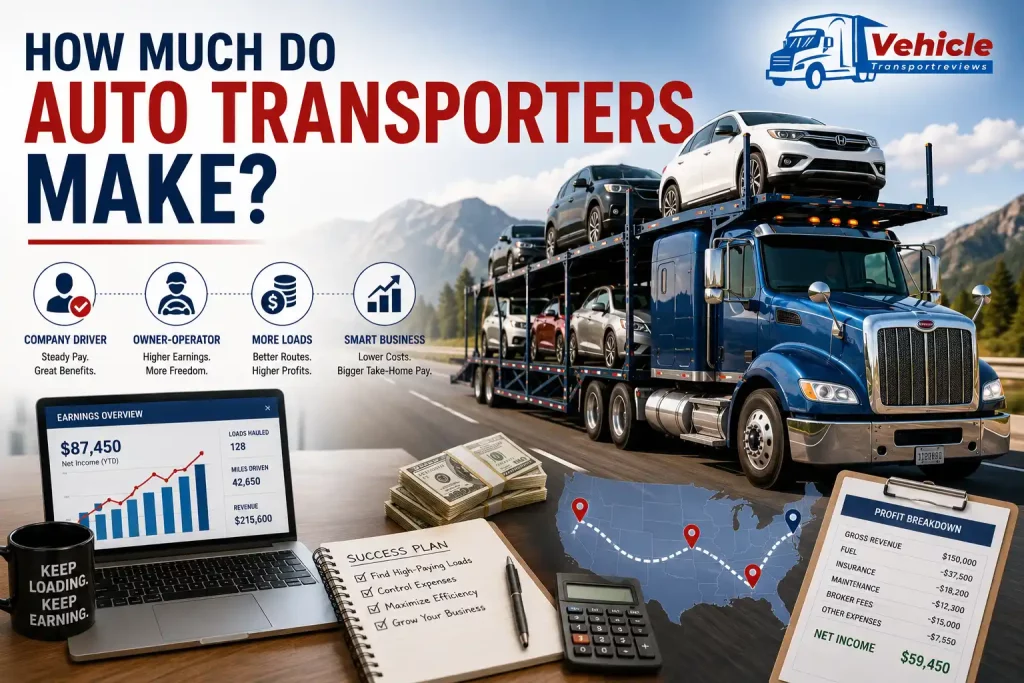
You see the big rigs rolling down the highway and wonder how much money the driver actually takes home. The customer pays fifteen hundred dollars to ship a car across the country. Yet the person behind the wheel often keeps only a small slice of that money. Fuel, insurance, and empty miles eat away at the rest.
This guide shows you the real numbers. You will see what company drivers earn, what owner-operators clear after expenses, and which routes pay the most. By the end you will know exactly what to expect before you climb into the driver seat or start your own hauling business.
Company Driver vs Owner-Operator – Two Very Different Paychecks
Most people who haul cars fall into one of two groups. Understanding the difference helps you choose the path that fits your life and goals.
Company Driver Salary Structure and Benefits
Company drivers work for established transport firms. They receive a steady paycheck, health insurance, and paid time off.
Here is a cleamparison of typical earnings:
| Position | Annual Earnings | Benefits Included |
|---|---|---|
| Company Driver | $41,000 – $79,000 | Health insurance, paid time off |
| Owner-Operator (Net) | $60,000 – $150,000 | None – you pay all expenses |
Owner-Operator Gross Revenue vs Real Take-Home Pay
Owner-operators run their own trucks. They keep a bigger share of each load but pay for everything themselves. Gross revenue can reach $150,000 to $350,000 a year. After fuel, insurance, maintenance, and truck payments, most net between $60,000 and $150,000.
If you are thinking about running your own operation, read our complete guide on how to become an auto transport broker.
How Much Do Car Haulers Make Per Car?
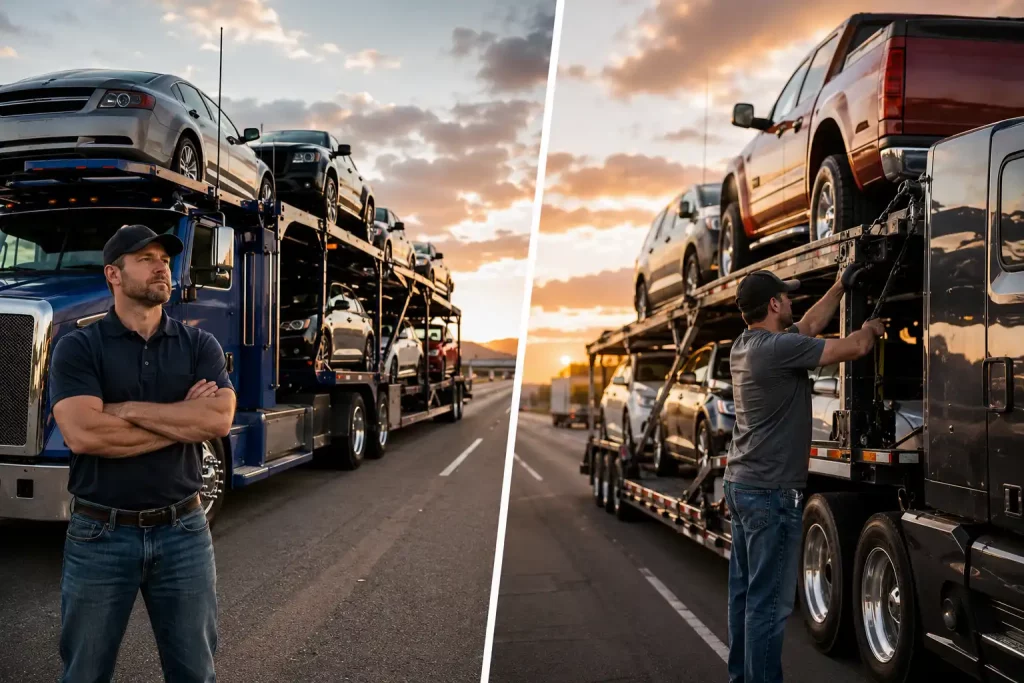
Earnings depend on trailer size and the type of vehicle you haul. Open carriers move more cars per trip while enclosed carriers charge premium rates.
Open Carrier Per-Car Earnings (7–9 Car Capacity)
A standard open trailer holds seven to nine cars. On a typical 1,000-mile run the gross revenue per vehicle averages $150 to $250. After expenses the driver usually keeps $80 to $180 per car.
Enclosed Carrier Per-Car Earnings (2–6 Car Capacity)
Enclosed trailers protect luxury and classic cars. Rates run higher because of the added care. Drivers often clear $400 to $800 per car after expenses on the same distance.
Premium Routes and Specialty Loads That Pay the Most
Certain loads pay better than others. Military moves, snowbird season runs, and luxury vehicles command higher rates. Non-running cars also add a winch fee that boosts your per-car income.
To understand what customers actually pay for these loads, see our breakdown of how much does auto transport cost.
| Trailer Type | Cars per Load | Average Net per Car | Best For |
|---|---|---|---|
| Open (7–9 cars) | 7–9 | $80 – $180 | Standard vehicles |
| Enclosed (2–6 cars) | 2–6 | $400 – $800 | Luxury, classic, exotic cars |
Route Selection and Geography – How Location Changes Your Pay
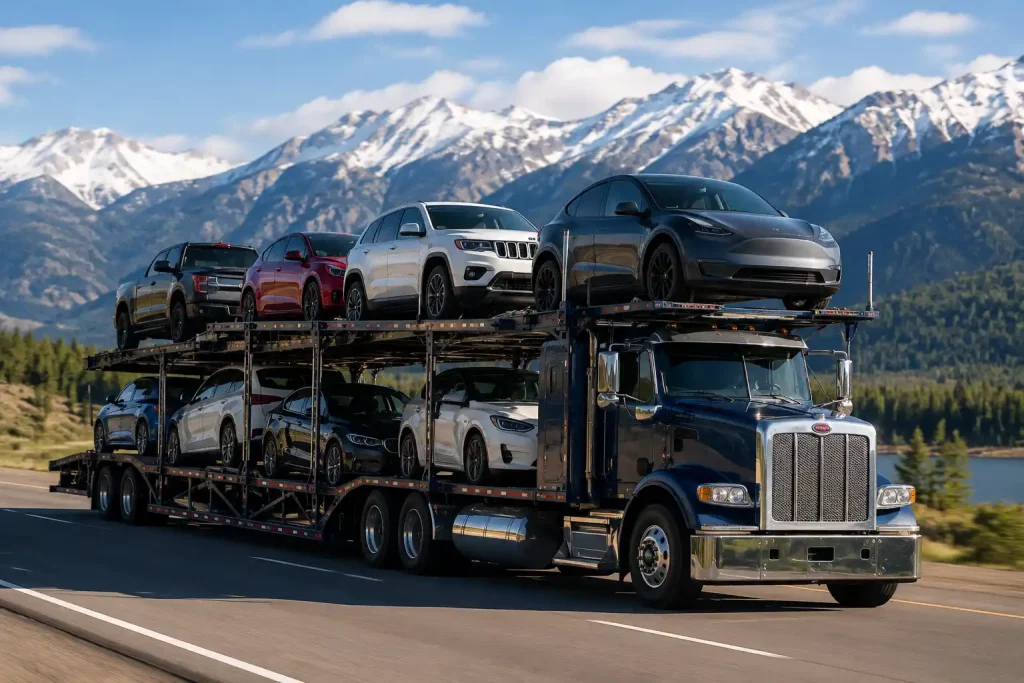
Where you drive matters more than how far you drive. High-traffic corridors keep your trailer full and your wallet healthy.
High-Demand Corridors vs Rural Routes
Busy lanes like California to Texas or Florida to the Northeast offer steady work. Rural pickups force long empty miles that cut deeply into your profit.
Seasonal Snowbird and Military Moves
Winter snowbird traffic from the Northeast to Florida pays well. Military relocation contracts also deliver reliable, higher-paying loads.
Short-Haul Dealership vs Long-Haul Cross-Country
Short local runs pay less per mile but let you stay closer to home. Long-haul trips pay better per mile but keep you on the road for days at a time. If you want to learn more about the actual work carriers do on these routes, read our guide on how auto transport carriers work.
3-Car, 6-Car, and 9-Car Hauling Income Projections
Your choice of trailer size changes everything about your earnings. Each setup has its own break-even point and monthly income range.
| Trailer Size | Weekly Gross | Monthly Net (After Expenses) | Best For |
|---|---|---|---|
| 3-Car (Hotshot) | $3,000 – $5,000 | $5,000 – $7,000 | Beginners, local/regional |
| 6-Car Enclosed | Varies | $10,000+ | Luxury & classic cars |
| 9-Car Open | $25,000 – $35,000 | $9,000 – $14,000 | Long-haul volume operators |
3-Car Hauling: The Hotshot Model
Many drivers start with a 3-car wedge trailer pulled by a one-ton dually. You can gross $3,000 to $5,000 per week. After fuel and basic expenses, most solo operators net $5,000 to $7,000 monthly.
6-Car Enclosed: The Specialty Niche
Moving to a 6-car enclosed trailer lets you charge premium rates for luxury and classic cars. You earn $400 to $800 per vehicle. With steady work you can clear $10,000 or more each month.
9-Car Open: The Long-Haul Powerhouse
A full 9-car open trailer is the volume king. On busy long-haul routes you can gross $25,000 to $35,000 monthly. After all expenses most experienced drivers take home $9,000 to $14,000 per month.
Key Cost Drivers That Determine True Car Hauler Income Per Vehicle
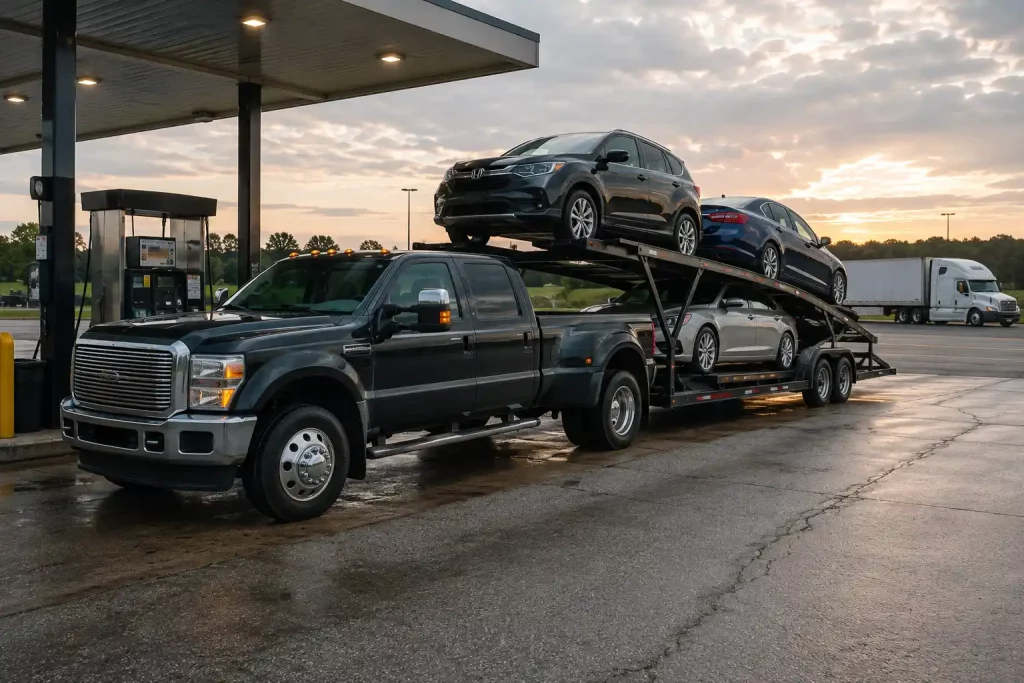
Gross revenue looks impressive, but your real paycheck depends on how well you control expenses.
Fuel, Insurance, and Maintenance Breakdown
Fuel is your biggest variable cost and can eat 25% to 35% of every load. Commercial insurance often runs $15,000 to $22,000 a year. You should set aside at least $0.20 per mile for maintenance and unexpected repairs.
Deadhead Miles and Load Optimization
Empty miles kill profits faster than anything else. Smart route planning and using load boards help you stay loaded. Every empty mile costs you time and money with no revenue coming in.
Broker Fees, Repairs, and Depreciation
Brokers usually take 10% to 20% off the top. Truck and trailer depreciation adds another hidden cost. Successful transporters build these numbers into every quote so they know their true profit per car.
Scaling from Solo Operator to Small Fleet
Once you prove the business works, many drivers think about adding trucks.
When It Makes Financial Sense to Add Trucks
You usually need consistent monthly revenue above $12,000 before hiring your first driver. Adding a second truck spreads fixed costs like insurance and dispatch software across more loads.
Payroll, Compliance, and Management Costs
Payroll taxes, workers’ compensation, and extra insurance can add $30,000 to $50,000 per new driver each year. You also need better software and someone to handle dispatch and paperwork.
Real-World Fleet Profitability Examples
A two-truck fleet that stays busy can net $150,000 to $250,000 combined after all expenses. However, poor management or too much downtime quickly turns a profitable solo operation into a money-losing fleet.
Industry Realities and Common Questions
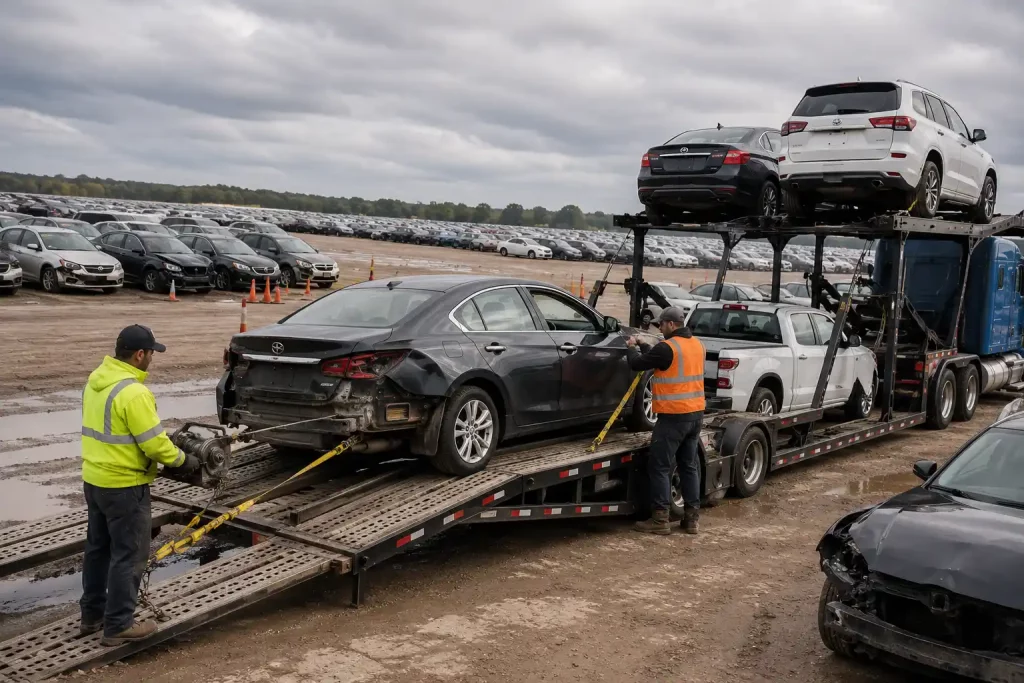
Short-Haul Dealership Routes
Local dealership runs pay $300 to $600 per day. You complete multiple trips but spend more time in traffic and loading yards.
Non-Running Auction Cars
Inoperable vehicles add a $100 to $200 winch fee. This extra money helps cover the longer loading time and special equipment.
Military and Snowbird Season Pay
Military relocation contracts and winter snowbird moves often pay the highest rates because of tight deadlines and steady volume.
Is Car Hauling Still Profitable in Today’s Market?
Yes, car hauling remains profitable for drivers who stay organized and control costs. Open carriers net $150 to $250 per car on average. Enclosed runs can clear $400 to $800 per vehicle when you choose the right loads.
Success comes down to full trailers, smart routing, and keeping overhead low. Drivers who treat it like a business rather than a job earn the most.
Frequently Asked Questions
How much do car haulers make per car on average?
Most drivers clear $150 to $250 per car on open trailers after expenses. Enclosed haulers often net $400 to $800 per vehicle. The exact amount depends on distance, trailer size, and how well you control costs.
What is the difference between company driver and owner-operator pay?
Company drivers earn a steady salary between $41,000 and $79,000 plus benefits. Owner-operators gross much more but pay all their own expenses. Net income for experienced owner-operators usually lands between $60,000 and $150,000.
How much do auto transporters make on short local routes?
Short-haul dealership runs pay $300 to $600 per day. You complete multiple trips but spend more time in traffic and loading yards. These routes work well for drivers who want to stay close to home.
Do non-running cars pay more to haul?
Yes. Carriers add a $100 to $200 winch fee for inoperable vehicles. The extra money helps cover the longer loading time and special equipment needed.
How do fuel prices affect what auto transporters make?
High diesel prices cut directly into your profit. Fuel often eats 25% to 35% of every load. Smart drivers lock in surcharges or choose shorter routes to protect their margins.
Can you make a good living with just a 3-car trailer?
Yes. Many solo operators net $5,000 to $7,000 per month with a 3-car setup. It is a great starting point that lets you learn the business without massive upfront costs.
Is enclosed transport worth the extra effort?
Enclosed work pays more per car but requires a bigger investment in the trailer and insurance. Drivers who specialize in luxury and classic cars often find it more profitable than open transport.
Final Takeaways
Auto transporters earn real money when they understand the numbers. Company drivers enjoy steady pay and benefits. Owner-operators can clear six figures but must manage every expense carefully.
Focus on full loads, smart routes, and keeping costs low. Whether you drive for a company or run your own rig, consistent effort and good planning turn this into a solid career. Start small, learn the business, and scale when you are ready. The road rewards those who treat hauling like the business it truly is.