Moving your car across the country can feel overwhelming. You picture the excitement of a new city, but then the worry hits. How much will this actually cost? One surprise bill can ruin the whole plan. That is why knowing the real numbers matters so much right now.
In 2026 the average cost to ship a car sits between $900 and $2,200 for most moves. Some people pay less. Others pay more. The difference comes down to a few clear factors you can control. This guide gives you the honest numbers you need before you book anything.
Car Shipping Cost Calculator 2026
Quote From Senior Auto Transport Experts
Instant quote • No obligation • 100% free
Auto Transport Cost Overview
Current National Average in 2026
Most drivers pay between $1,100 and $1,600 for open transport. That range covers the majority of shipments this year. Auto transport prices have risen slightly since last year because of fuel costs and higher demand.
How 2026 Prices Compare to 2025
Last year many people spent around $1,000 for similar distances. This year you should expect to pay 10-15% more in most cases. The increase feels real when you start getting quotes.
The Simple Rule of Thumb Still Works
Many experts still use $1 per mile as a quick estimate. In reality the true average sits closer to $0.90 – $1.20 per mile depending on your route and vehicle. Use this as a starting point only.
Auto Transport Cost by Distance and Transport Type
Here’s a quick overview of average costs by distance in 2026:
| Distance | Open Transport | Enclosed Transport |
|---|---|---|
| Under 500 miles | $600 – $900 | $950 – $1,300 |
| 500 – 1,500 miles | $800 – $1,400 | $1,200 – $1,900 |
| Over 1,500 miles | $1,400 – $2,200 | $2,100 – $2,800 |
Short Distance Moves Under 500 Miles
These shorter trips usually cost between $600 and $900 for open transport. Enclosed service pushes the price up to $950 or more. Many people choose open transport for these runs because the savings add up fast.
Medium Distance Moves of 500 to 1500 Miles
This range covers a huge number of moves. Expect to pay $800 to $1,400 for open transport. Enclosed options often land between $1,200 and $1,900.
Long Distance Moves Over 1500 Miles
Cross country shipments bring the biggest sticker shock for some people. Open transport averages $1,400 to $2,200. Enclosed service can reach $2,800 when you add extra protection for luxury cars.
The Impact of Current Fuel Prices on Auto Transport Cost
Fuel is one of the largest variable costs in auto transport. When diesel prices rise, carriers pass on much of that increase through fuel surcharges. This directly affects what you pay to ship your vehicle.
Current Diesel Prices in the US (May 2026)
The national average price for diesel now sits at approximately $5.60 – $5.64 per gallon. This marks a sharp increase compared to early 2025 levels. Some regions, especially the Midwest and California, are seeing even higher prices, with several states approaching or exceeding $6.00 per gallon.
How Fuel Prices Translate into Higher Shipping Costs
Carriers typically add a fuel surcharge based on current diesel rates and route distance. For every $1 increase in diesel price, auto transport rates usually rise by $75 to $150 per vehicle on long-distance moves. On a typical 1,500-mile shipment, this can add several hundred dollars to your total quote.
Fuel Surcharge Comparison
| Diesel Price Range | Typical Fuel Surcharge | Impact on 1,000-Mile Move (Open Transport) | Impact on Coast-to-Coast Move |
|---|---|---|---|
| $3.50 – $4.00/gal | 0% – 8% | +$0 – $80 | +$0 – $120 |
| $4.50 – $5.00/gal | 10% – 18% | +$80 – $150 | +$150 – $250 |
| $5.60+ /gal (Current) | 20% – 30%+ | +$150 – $250 | +$300 – $500+ |
Note: These are average figures. Actual surcharges vary by company, route popularity, and contract terms.
How to Protect Yourself from High Fuel Costs
- Book during off-peak seasons when demand (and fuel surcharges) tend to be lower.
- Ask carriers for a locked-in fuel surcharge at the time of booking.
- Compare multiple quotes, some brokers absorb part of the fuel increase to stay competitive.
- Consider terminal-to-terminal shipping, which can reduce overall fuel exposure.
High fuel prices are currently one of the main reasons auto transport rates feel elevated in 2026. Understanding this helps you plan better and avoid surprise charges.
Auto Transport Cost by Popular Routes
| Route | Average Cost (Open) | Notes |
|---|---|---|
| New York → Florida | $879 – $1,363 | Very busy route |
| California → Washington | $774 – $1,199 | Good availability |
| Florida → California | $1,445 – $2,094 | Long distance, higher demand |
| New York → California | $1,475 – $2,204 | One of the most expensive lanes |
East Coast Routes
Shipping from New York to Florida often costs between $879 and $1,363 right now. New Jersey to Florida runs very close at $873 to $1,394. These routes stay busy so prices stay fairly competitive.
West Coast Routes
California to Washington usually falls between $774 and $1,199. Oregon to California stays a bit lower at $724 to $1,081. Many families use these lanes during summer moves.
Coast to Coast Routes
Florida to California currently averages $1,445 to $2,094. New York to California sits in a similar range at $1,475 to $2,204. These long hauls reward people who stay flexible with dates.
You can find more details about trusted companies in California in our guide to the best car shipping companies in California.
What Affects Auto Transport Cost in 2026
Open Versus Enclosed Transport
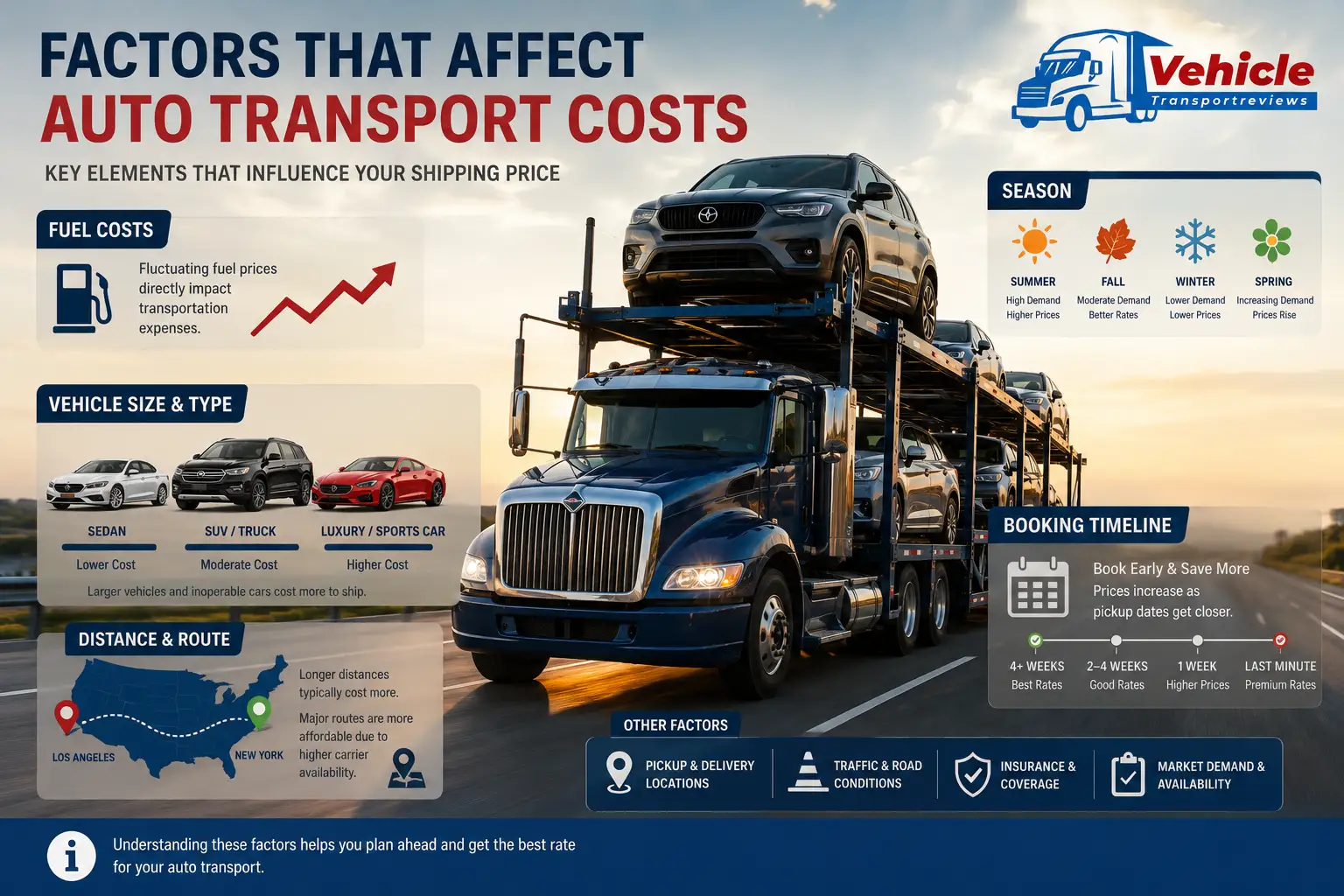
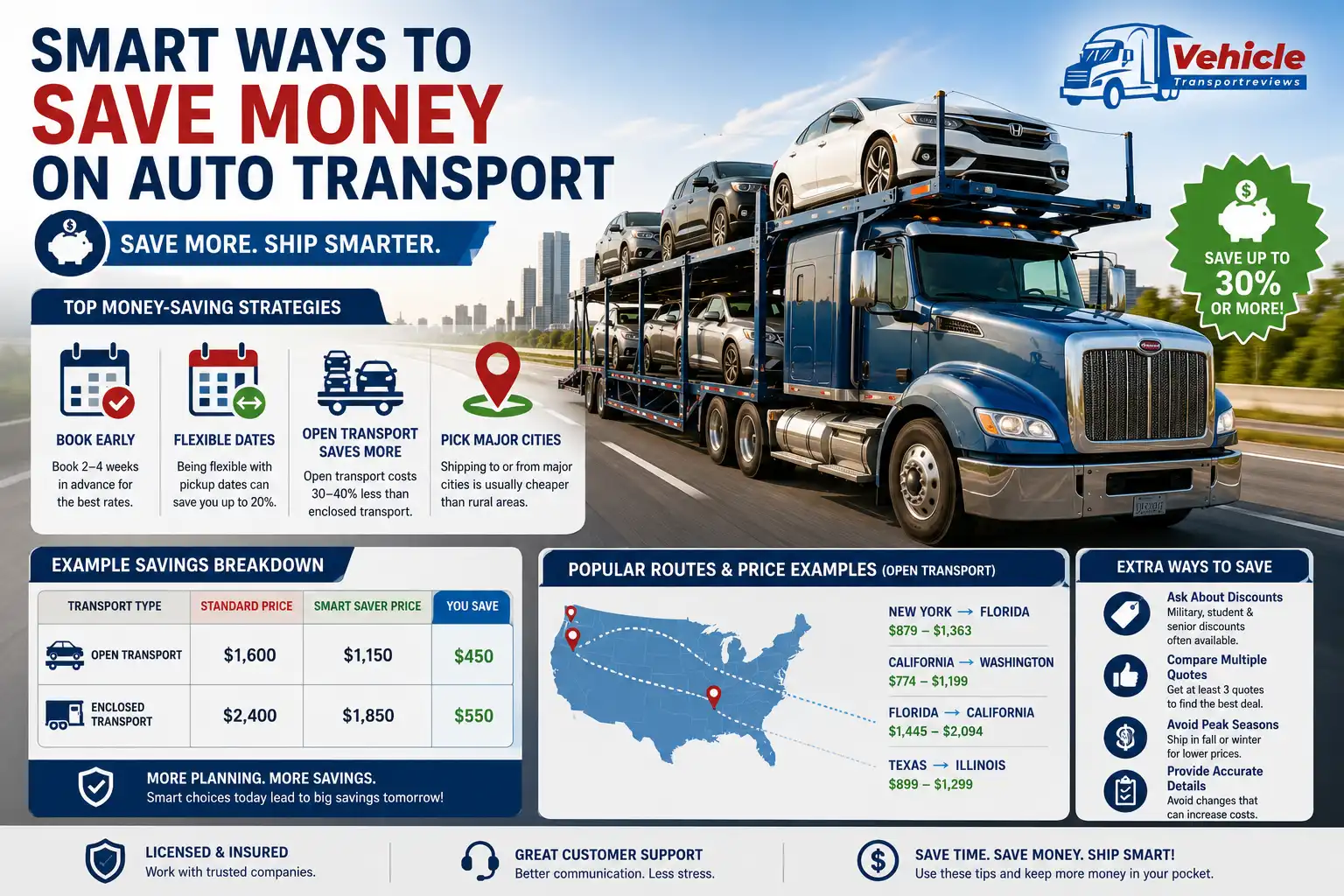
Open transport in comparison to enclosed remains the most popular choice because it saves 30-40%. Your car rides on a regular trailer and stays exposed to weather. Enclosed transport gives full protection inside a closed trailer. Most people only need it for classic cars or vehicles worth over $75,000.
Vehicle Size and Weight
Bigger vehicles cost more because they take extra space and fuel. A large pickup or SUV can add $150 to $400 compared to a compact sedan. Electric vehicles sometimes cost a little extra too because of their weight and special handling needs.
Booking Timeline and Season
Booking two to four weeks ahead usually gets you the best rates. Last minute requests can add 15-30% to the final price. Summer months from May through September bring higher demand and higher costs. Fall and winter often deliver the lowest prices of the year.
You can learn more about preparing your vehicle the right way in our guide on how to prepare your car collection for a car show.
Now that you understand the main factors, it is time to look at the hidden costs that often catch people off guard.
Hidden Fees That Increase Your 2026 Bill
Fuel Surcharges
Fuel prices change almost every week. Most companies add a fuel surcharge on top of the base price. In 2026 this can add $40 to $80 on a long distance move. Always ask for the current fuel rate before you book.
Storage and Terminal Fees
If your car sits at a terminal for more than a few days, fees start adding up fast. Some companies charge $15 to $30 per day. A small delay can easily cost you $100 or more before you even realize it.
Cancellation and Change Fees
Life happens. Plans change. Many companies charge $150 to $300 if you cancel or change the pickup date close to the shipping day. Always read the fine print before you sign anything.
Broker vs Carrier – Which One Costs More?
What is the Difference?
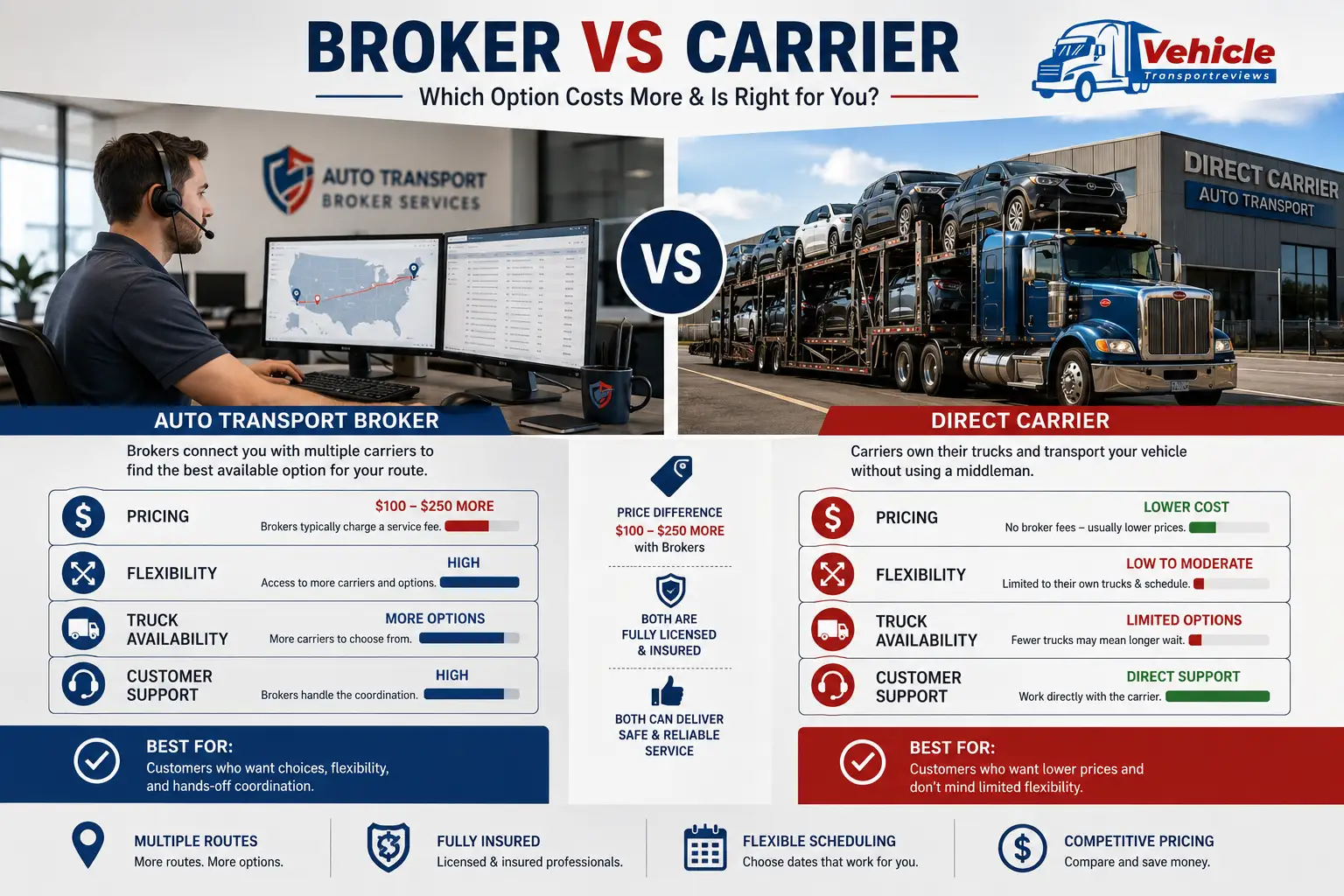
A broker connects you with different carriers. A carrier owns the trucks and moves your car themselves. Brokers often have access to more options, but carriers can sometimes offer better control over the actual transport.
Price Comparison in 2026
Brokers usually charge $100 to $250 more than direct carriers on average. However, they can also find better deals when demand is high. Direct carriers tend to be slightly cheaper but may have fewer available trucks on your route.
| Type | Average Price Difference | Best For |
|---|---|---|
| Broker | $100 – $250 higher | More options and flexibility |
| Direct Carrier | Usually cheaper | Lower price and direct control |
When to Choose Each Option
Choose a broker if you want more choices and do not mind paying a small premium. Go with a direct carrier if you want lower prices and are flexible with dates. Always check reviews before you decide.
Cost Examples from Actual Shipments
Sedan from Texas to Florida
A 2024 Honda Civic shipped from Austin to Miami cost $920 for open transport. The driver picked it up on time and delivered it in five days. Total distance was around 1,100 miles.
SUV from California to New York
A family shipped their 2023 Toyota Highlander from Los Angeles to Brooklyn. They paid $1,850 for open transport. The move took seven days and included one fuel surcharge of $65.
Luxury Car from Illinois to California
A classic 1969 Mustang was shipped enclosed from Chicago to San Francisco. The final bill came to $2,650. The extra protection and special handling added almost $800 compared to open transport.
Shipping a Car Cost vs Driving It– Full Cost Comparison
Here’s a clear comparison for a 2,500-mile trip:
| Expense | Driving Cost | Shipping Cost (Open) | Shipping Cost (Enclosed) |
|---|---|---|---|
| Gas / Fuel | $425 | Included | Included |
| Hotels + Food | $540 | $0 | $0 |
| Wear & Tear + Time | $285 + 5 days | $0 + 7 days | $0 + 7 days |
| Total Estimated Cost | $1,250 | $1,650 | $2,300 |
Driving Costs Breakdown
Driving 2,500 miles across the country usually costs around $1,250 in total. This includes gas at $425, hotels at $360, meals at $180, and wear and tear at $285. You also lose four to five days of your time.
Shipping Costs Breakdown
Shipping the same distance with open transport costs between $1,400 and $1,900. Enclosed auto transport cost raises the price to $2,100 to $2,600. You save time and avoid the stress of a long road trip.
Which Option Wins in 2026?
For most people, shipping wins when the distance is over 1,500 miles. You save time, reduce stress, and often spend less money once you add up hotels, food, and vehicle wear. Short trips under 800 miles are usually cheaper to drive yourself.
You now have a clear picture of the real costs in 2026. The next step is learning exactly how to calculate your own price and get the best possible deal.
How to Calculate Your Exact Auto Transport Cost
Step-by-Step Quote Process
Start by visiting at least three different company websites. Enter your pickup city, delivery city, vehicle details, and preferred dates. Most sites give you an instant estimate within seconds. Write down each quote so you can compare them side by side.
What Information You Must Provide
Be honest about your vehicle. Mention if it is running or not. Tell them the exact make, model, and year. Also share whether you want open or enclosed transport. The more accurate your details, the closer the quote will be to your final bill.
Warning About Non-Binding Quotes
Some companies give quotes that can change later. These are called non-binding quotes. Always ask if the price is locked in. A binding quote protects you from surprise increases as long as your vehicle matches the description you gave.
The Cheapest Way to Ship Your Car
Best Booking Strategies
Book your shipment two to four weeks in advance. This is the sweet spot for the lowest rates. Being flexible with your pickup window by a few days can also save you $100 to $200. Avoid peak summer months if possible.
Smart Money-Saving Tips
Choose open transport unless you own a luxury or classic car. Ship from or to a major city instead of a rural area. Ask about military, senior, or student discounts. Many companies offer 10-15% off during slower months.
Common Mistakes That Cost Extra Money
Never pay the full amount upfront. Reputable companies only ask for a small deposit. Also avoid last-minute bookings. Rushing almost always adds 15-30% to the final price. Read every line of the contract before you sign.
Our Recommendations – Best Value Auto Transport Companies
Top Pick for Most People
We recommend starting with companies that offer transparent pricing and strong customer service. Look for ones that provide real-time tracking and clear communication throughout the process.
Best for Luxury Vehicles
If you are shipping a high-value car, choose a company that specializes in enclosed transport. They usually have better insurance coverage and more careful handling procedures.
Best Budget Option
For standard vehicles on common routes, smaller regional carriers often beat the big names on price. Just make sure they are properly licensed and insured before you book.
For more options on international moves, check our complete guide on shipping cars overseas.
Frequently Asked Questions
How much does it cost to ship a car 1,000 miles?
Most people pay between $800 and $1,400 for open transport over 1,000 miles in 2026. Enclosed service usually costs $1,100 to $1,800 for the same distance. The final price depends on your exact cities, vehicle size, and how far in advance you book. Rural pickup or delivery locations can push the cost higher by 15–20%.
Is it cheaper to ship or drive?
For distances over 1,500 miles, shipping is often cheaper once you factor in gas, hotels, food, and vehicle wear and tear. A 2,500-mile drive can easily cost $1,200–$1,400 in total expenses and time. Shipping the same distance with open transport usually lands between $1,400 and $1,900. Short trips under 800 miles are almost always cheaper to drive yourself.
What is the difference between broker and carrier?
A broker acts as a middleman and connects you with multiple carriers. A carrier owns the trucks and handles the transport directly. Brokers often charge $100–$250 more but give you more options and flexibility. Direct carriers are usually cheaper but may have limited availability on your specific route.
Can I get an instant quote online?
Yes. Most reputable companies now offer instant quotes directly on their websites. You simply enter your pickup and delivery cities, vehicle details, and preferred dates. These quotes are usually accurate within 10–15%, but the final price can change slightly if your vehicle condition or dates differ from what you entered.
Do fuel prices affect my final cost?
Yes. Most companies add a fuel surcharge that changes with diesel prices. In 2026 this surcharge can add $40 to $80 on long-distance moves. The surcharge is usually calculated at the time of pickup, so prices can go up or down slightly depending on when you ship.
What happens if I need to change my pickup date?
Changing your pickup date close to the shipping day usually costs extra. Most companies charge $150 to $300 for last-minute changes. The earlier you notify them, the lower the fee will be. Always check the cancellation and change policy before you book.
How far in advance should I book to get the best price?
Booking 2 to 4 weeks in advance gives you the best rates in 2026. Booking earlier than that doesn’t always help, and booking less than 7 days in advance can add 15–30% to your total cost. Summer months (May–September) are the busiest, so plan even earlier if you’re moving during peak season.
Final Takeaways
You now have everything you need to understand auto transport costs in 2026. The average price ranges from $900 to $2,200 depending on distance and vehicle type. Open transport saves the most money for regular cars. Booking early and staying flexible with dates can cut your bill by 15-30%. Always compare multiple quotes and read the contract carefully before you pay anything. The right preparation now will save you time, stress, and money later. Your move can be smooth and affordable when you know exactly what to expect.