
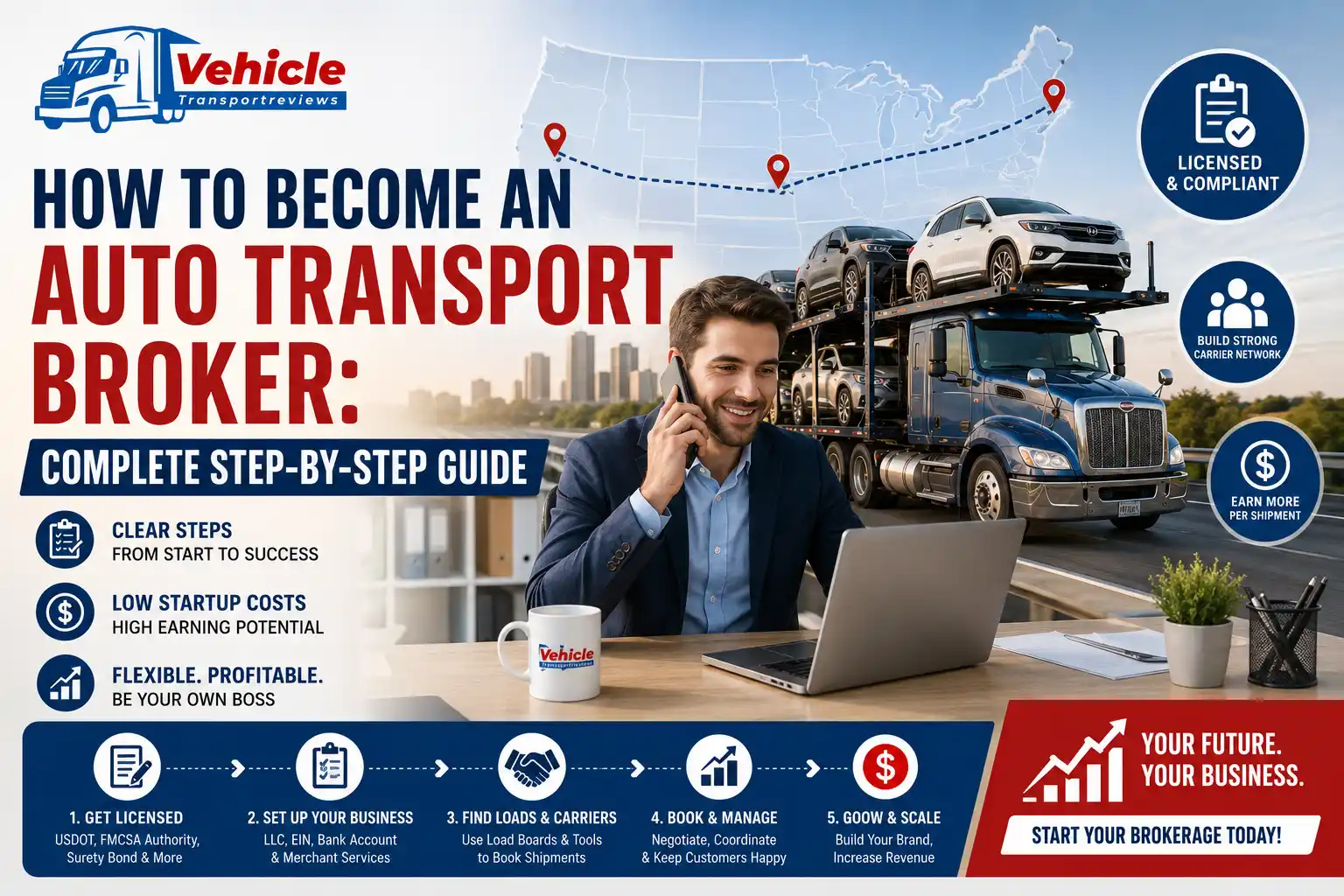
Starting your own auto transport brokerage can be one of the smartest business moves you make. It offers flexibility, strong earning potential, and the chance to build something of your own. However, many people feel overwhelmed by the legal steps and requirements involved.
This guide breaks everything down in a clear and practical way. You will learn exactly what you need to do, how much it costs, and what to expect along the way. By the end, you will have a complete roadmap to launch your brokerage with confidence.
What Does an Auto Transport Broker Actually Do?
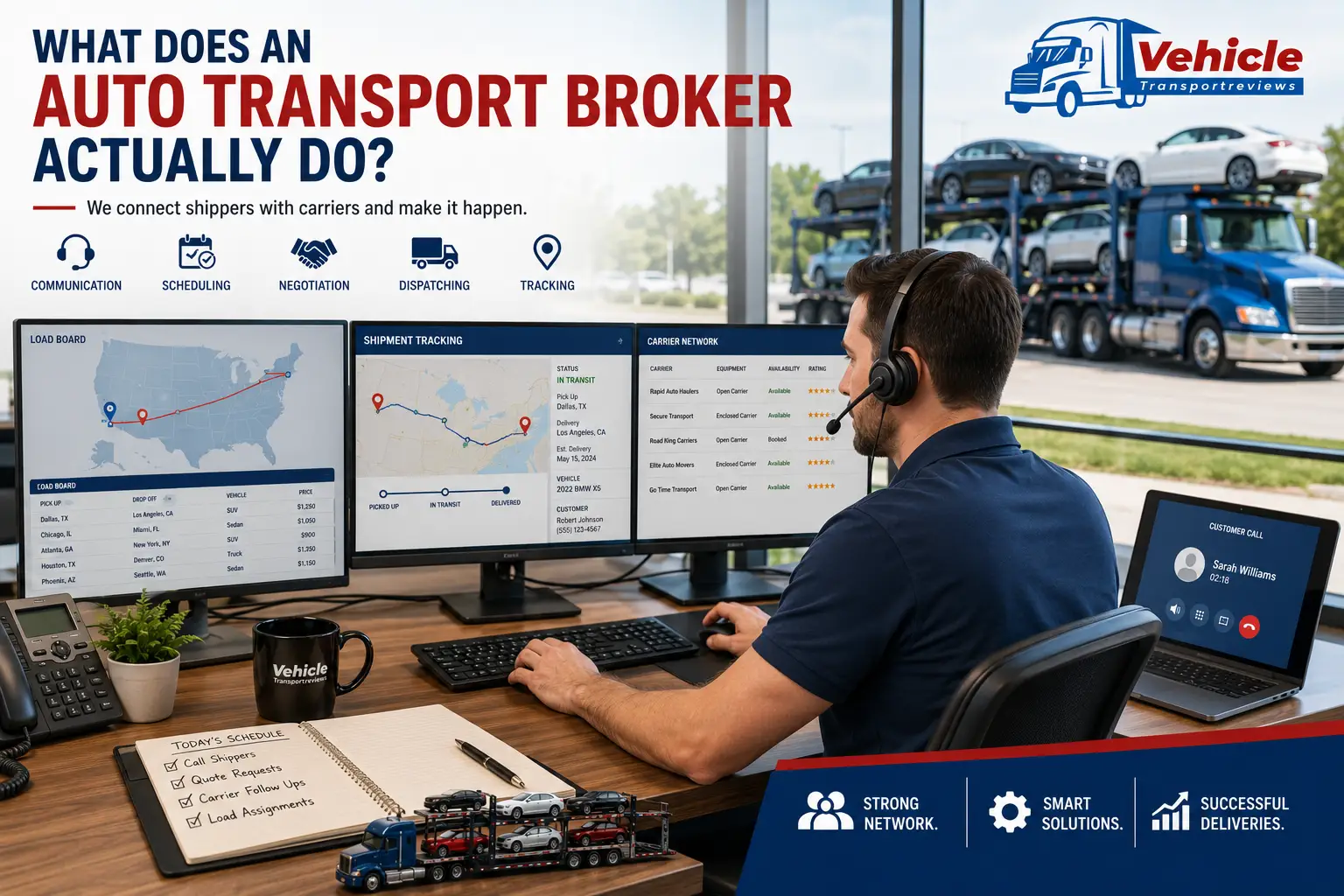
An auto transport broker connects people who need to move vehicles with carriers who can transport them. You never own the trucks or handle the driving. Instead, you act as the middleman who makes the deal happen.
Broker vs Carrier – Key Differences
A broker arranges transportation but does not own vehicles. A carrier owns the trucks and physically moves the cars. Brokers focus on sales, coordination, and customer service while carriers focus on logistics and operations. If you want to understand the carrier side better, read our guide on how auto transport carriers work.
How Brokers Make Money
Most brokers earn a commission on every shipment they arrange. This usually ranges between 10% and 15% of the total transport cost. On average, brokers make between $150 and $400 per vehicle moved.
Daily Responsibilities of a Successful Broker
Your day typically involves finding shippers, negotiating rates, matching loads with reliable carriers, tracking shipments, and handling customer questions. Strong communication and organization are essential for success.
Is Becoming an Auto Transport Broker Right for You?
Before you invest time and money, it is important to understand if this business fits your personality and goals.
Pros of Being a Broker
You can work from home with low startup costs. There is no need to buy trucks or hire drivers. The industry continues to grow, and successful brokers enjoy flexible schedules and uncapped income potential.
Cons and Challenges
You will face competition and must constantly find new leads. Building trust with both shippers and carriers takes time. You also need to stay on top of regulations and manage cash flow carefully during slow periods.
Who Succeeds in This Business?
People who do well usually have strong sales skills, are organized, and enjoy solving problems. Those who treat it like a real business rather than a side hustle tend to grow faster and earn more.
Legal Requirements to Become a Broker
Before you can legally operate, you must complete several federal requirements. Skipping any of these steps can result in fines or even the shutdown of your business.
Get Your USDOT Number
This is your business identification number with the Department of Transportation. It is free to obtain and serves as the foundation for all other registrations. You can verify requirements directly on the FMCSA website.
Apply for FMCSA Broker Authority
You must file Form OP-1 with the Federal Motor Carrier Safety Administration. This gives you official authority to work as a broker. The application fee is $300, and approval usually takes four to six weeks.
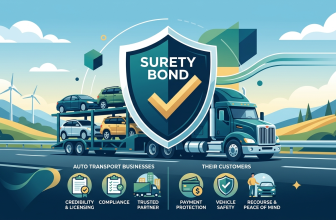
Secure the $75,000 Surety Bond
You are required to have a $75,000 surety bond (Form BMC-84) or a trust fund (Form BMC-85). This bond protects shippers and carriers if you fail to pay them. Most brokers purchase this bond through an insurance company.
File BOC-3 Process Agents
You must designate process agents in every state where you do business. These agents receive legal documents on your behalf. Many companies offer this service for a small annual fee.
Pay the Application Fee and Wait for Approval
After submitting everything, you will receive your MC number once approved. Only then can you legally start brokering shipments.
Step-by-Step Guide to Starting Your Brokerage
Now that you understand the legal side, here is exactly how to set up your business.
Choose and Register Your Business Name
Pick a name that is easy to remember and relevant to auto transport. Then register it as an LLC. This structure offers good liability protection and is the most popular choice among brokers.
Get Your EIN
An Employer Identification Number is required to open a business bank account and file taxes. You can get one instantly and for free through the IRS website.
Open a Business Bank Account
Keep your personal and business finances separate. This makes bookkeeping much easier and looks more professional to clients and carriers.
Choose Merchant Services for Payments
You will need a reliable way to accept payments from customers. Look for services with low fees and good customer support. Many brokers use Stripe, Square, or specialized transportation payment platforms.
Now that you have the foundation in place, let’s talk about the real numbers and practical details that will help you succeed.
How Much Does It Cost to Start an Auto Transport Brokerage?
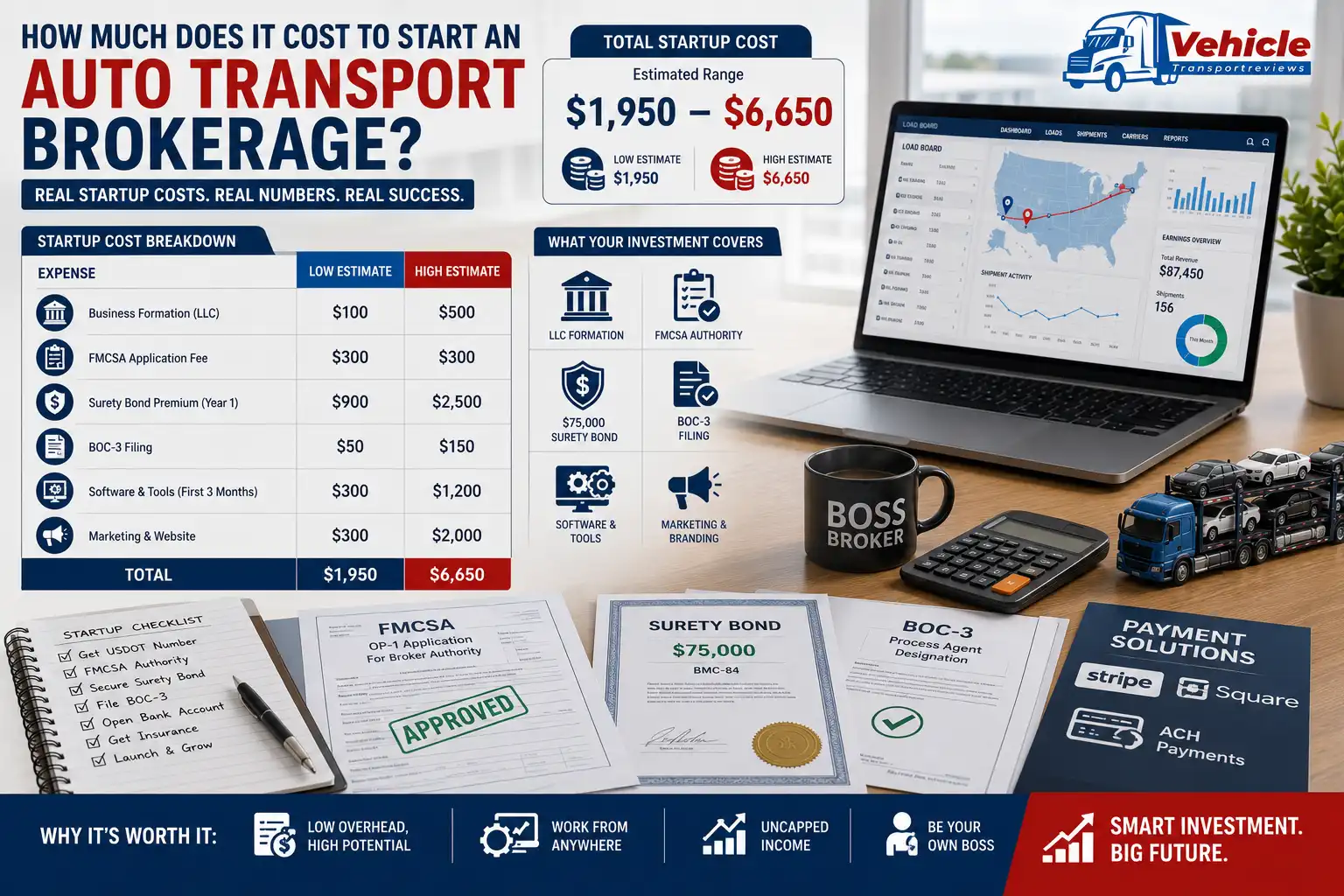
One of the biggest advantages of becoming a broker is the low startup cost compared to owning trucks. Most people can launch with a modest investment.
Here is a realistic breakdown of what you can expect to spend:
| Expense | Low Estimate | High Estimate |
|---|---|---|
| Business Formation (LLC) | $100 | $500 |
| FMCSA Application Fee | $300 | $300 |
| Surety Bond Premium (Year 1) | $900 | $2,500 |
| BOC-3 Filing | $50 | $150 |
| Software & Tools (First 3 Months) | $300 | $1,200 |
| Marketing & Website | $300 | $2,000 |
| Total | $1,950 | $6,650 |
Most new brokers spend between $3,000 and $5,000 to get fully set up and running.
How Much Can You Earn as an Auto Transport Broker?
Earnings in this business vary widely depending on your effort, location, and how well you build your network.
Average Earnings Breakdown
Most brokers earn between $150 and $400 per vehicle they move. With consistent effort, many brokers handle 20 to 50 shipments per month in their first year.
Realistic First-Year Income
New brokers who treat this as a full-time business can realistically earn between $60,000 and $90,000 in their first year. Some reach six figures within 18 months.
Top Earners vs Average Brokers
Experienced brokers who build strong carrier relationships and focus on repeat shippers often earn $120,000 to $200,000+ annually. The top performers in the industry clear over $300,000 per year.
Specialized shipments, such as luxury vehicles or motorcycles, often pay higher commissions. You can learn more about how much does it cost to ship a motorcycle?
Best Tools and Software for Auto Transport Brokers
Using the right tools can save you hours every week and help you close more deals.
Load Boards
Load boards are essential for finding shipments. Popular options include DAT, Truckstop, and Super Dispatch. Many brokers use two or three platforms at once to increase their options.
TMS and Dispatch Software
A good Transportation Management System helps you manage shipments, track carriers, and stay organized. Look for platforms that offer mobile apps and real-time updates.
CRM and Lead Management Tools
Customer Relationship Management software helps you follow up with leads and maintain relationships. Simple tools like HubSpot or specialized broker CRMs work well for most people.
Common Mistakes New Brokers Make (And How to Avoid Them)
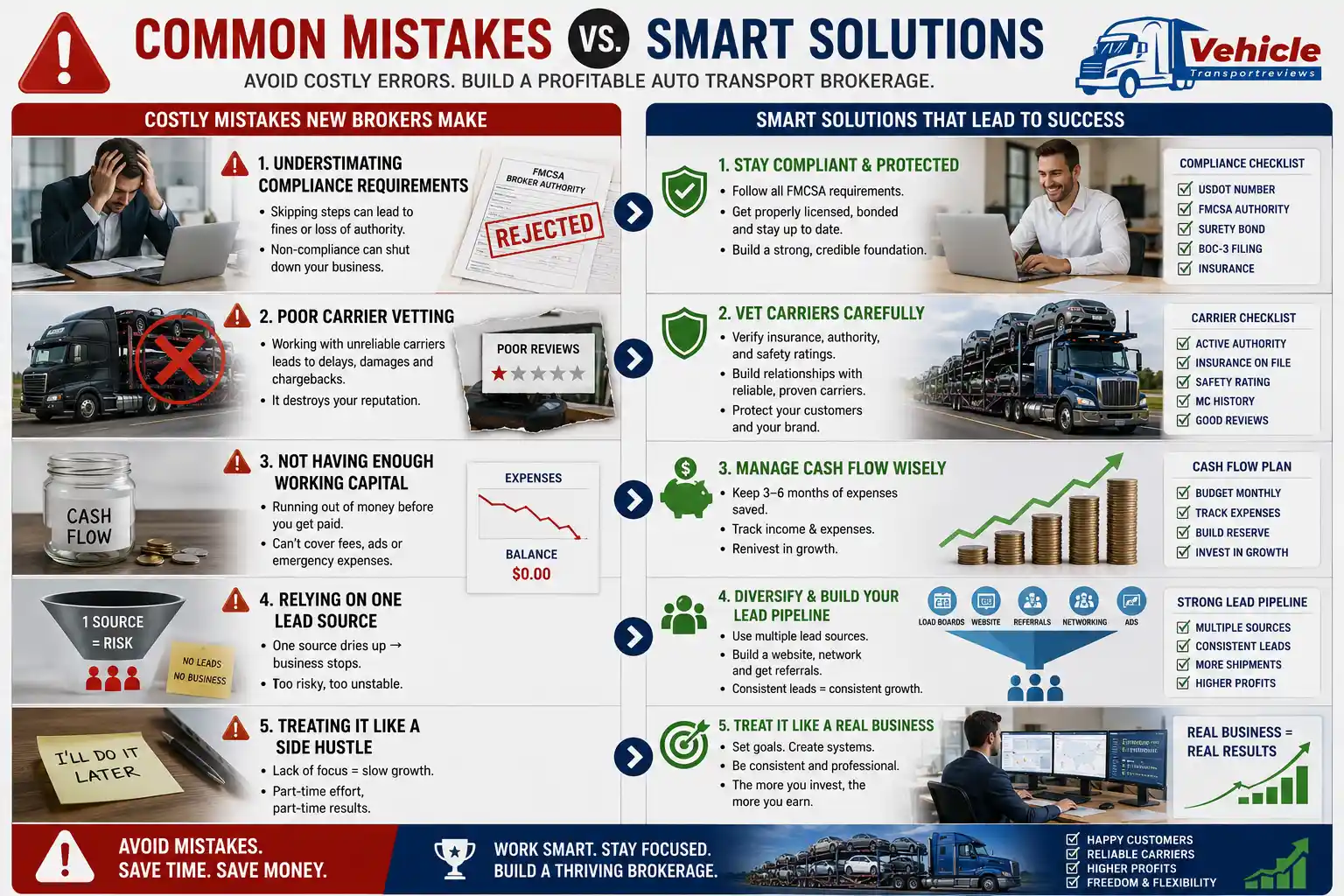
Many new brokers struggle in the beginning because they make avoidable errors.
Underestimating Compliance Requirements
Some people try to cut corners with licensing or bonding. This can lead to fines or loss of authority. Always stay fully compliant from day one.
Poor Carrier Vetting
Working with unreliable carriers damages your reputation. Always verify insurance, reviews, and safety records before assigning loads.
Not Having Enough Working Capital
Many new brokers run out of money before they start earning consistently. Keep at least three months of expenses saved before going full-time.
Relying Only on One Lead Source
Depending on a single load board is risky. Build multiple ways to find shippers, including your own website, networking, and referrals.
Read More: How much does it cost to rent a Lamborghini?
Frequently Asked Questions
Do I need experience to become an auto transport broker?
No prior experience is required. Many successful brokers started with zero background in transportation. What matters most is your willingness to learn and build relationships.
How long does it take to get approved by FMCSA?
The process usually takes between four and six weeks. However, it can sometimes take longer if your application has any issues.
Can I work from home as a broker?
Yes. Most brokers run their entire business from home. You only need a computer, phone, and internet connection to get started.
What is the biggest challenge for new brokers?
Finding consistent leads and building trust with both shippers and carriers is the hardest part for most beginners. It usually takes three to six months to gain steady momentum.
Do I need a truck or trailer to become a broker?
No. Brokers do not own or operate any vehicles. You simply arrange transportation between shippers and carriers.
How do I find my first customers?
Start with load boards, reach out to local car dealerships, and network with auto auction companies. Many brokers also get their first clients through referrals and online marketing.
Is auto transport brokerage still profitable in today’s market?
Yes. The industry continues to grow due to increasing vehicle sales and online car purchases. Brokers who provide excellent service and build strong networks remain profitable.
Final Takeaways
Becoming an auto transport broker is a realistic and rewarding path for anyone willing to put in the work. The startup costs are low, the requirements are clear, and the earning potential is strong.
Focus on getting properly licensed, building a reliable carrier network, and providing great service to your customers. Success comes from consistency and strong relationships rather than flashy marketing.
If you follow the steps outlined in this guide, you will be well on your way to running a successful brokerage. Start with the legal requirements today, and take it one step at a time.