
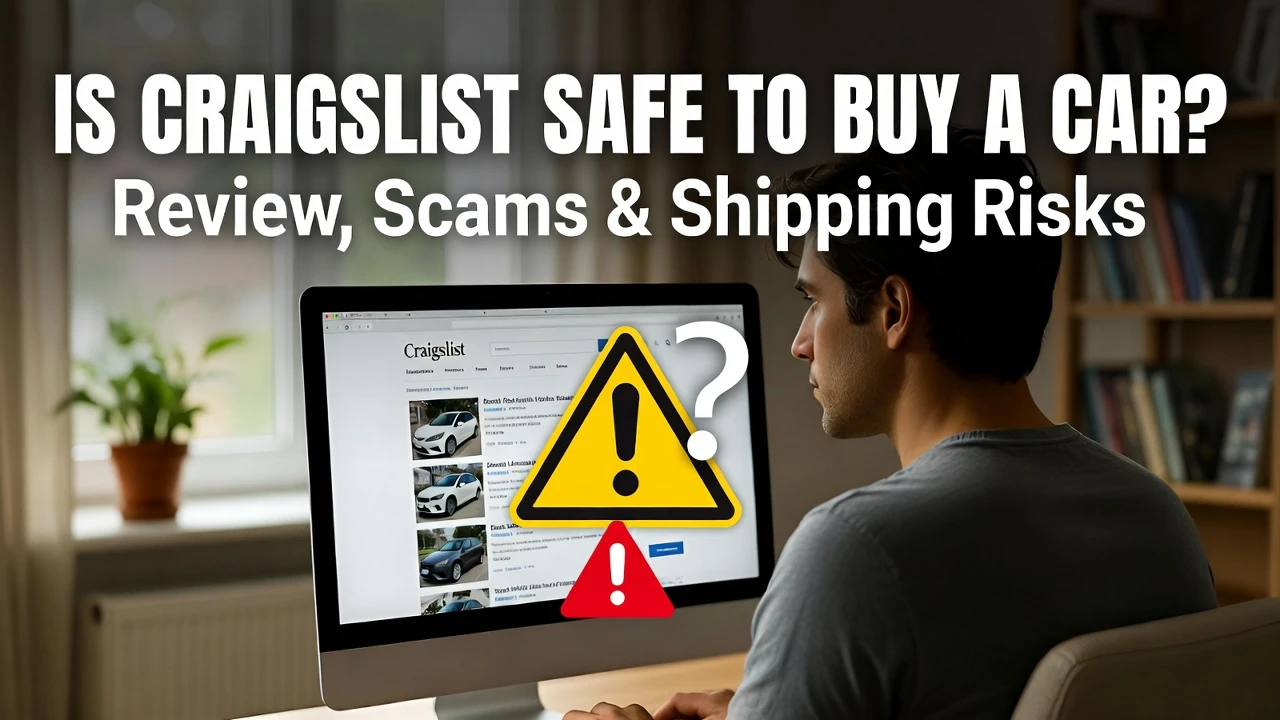
The question “is Craigslist safe for car buying” has a nuanced answer: legitimate deals exist (often 10-20% below dealer prices), but scammers exploit the platform’s anonymity and cash-based transactions. Common Craigslist car buying scams include fake VINs, stolen vehicles, rolled-back odometers, and “too good to be true” pricing luring victims into wire transfers or fake escrow services that steal thousands of dollars.
This review explains how to buy a car safely on Craigslist, red flags indicating Craigslist car scams to avoid, verification steps protecting your money, and when to walk away from suspicious deals that could cost you tens of thousands.
What Are the Biggest Craigslist Car Buying Scams?
The biggest Craigslist car scams include fake listings with stolen photos, wire transfer fraud requesting payment before viewing vehicles, fake shipping companies that don’t exist, title washing hiding accident history, stolen vehicles sold by criminals, and escrow scams using fake payment processors. These schemes cost victims an average of $2,000-$15,000 per incident.
Fake listing scams: Scammers steal photos from legitimate dealer websites or previous Craigslist ads, reposting them at prices 20-40% below market value to attract desperate buyers. They claim to be military members deployed overseas or recently relocated, unable to show the vehicle in person. They request wire transfers or gift cards for “shipping” that never happens—the vehicle doesn’t exist.
Wire transfer fraud: Criminals pressure buyers to send deposits via wire transfer, Zelle, or gift cards before seeing vehicles. Once money is sent, scammers disappear. Wire transfers are untraceable and non-refundable—banks cannot reverse them. Legitimate sellers never demand payment before in-person vehicle inspection and test drive.
Fake shipping scams: Sellers claim to use “Craigslist shipping services” or similar official-sounding companies to transport purchased vehicles. They provide fake tracking numbers and professional-looking websites. Craigslist has no shipping service—any mention of official Craigslist transport is a scam. Buyers lose $3,000-$8,000 to these schemes.
Title fraud: Sellers present forged titles, titles with liens still attached, or “lost title” excuses hiding the fact they don’t own the vehicle. Buyers unknowingly purchase stolen vehicles, then lose both the car and their money when police seize it. Always verify title authenticity through your state DMV before exchanging money.
Stolen vehicle resale: Criminals steal vehicles, forge documents, and sell quickly on Craigslist for cash. VIN numbers may be altered or swapped with legitimate titles from salvage vehicles. Buyers discover months later their “deal” was a stolen vehicle, facing criminal investigation and complete financial loss.
Escrow scams: Fake escrow websites claiming to hold payment safely until vehicle delivery actually send your money directly to scammers. Legitimate escrow services exist (Escrow.com), but scammers create convincing fake sites with similar names. Independently verify any escrow service before transferring funds.
How Can You Buy a Car Safely on Craigslist?
Buy a car safely on Craigslist by meeting sellers in person at public locations (police station parking lots ideal), never wiring money or sending gift cards, conducting in-person inspections with a trusted mechanic, verifying VIN numbers through CARFAX or AutoCheck, checking titles carefully for authenticity and liens, and completing transactions at your bank or DMV to ensure proper ownership transfer.
| Safety Practice | Why It Matters | Red Flag to Avoid |
|---|---|---|
| Meet in person only | Verify vehicle and seller exist | Seller refuses in-person meeting |
| Public location meetings | Safety, prevents crime | Insists on home or remote location |
| Cash or bank check only | Traceable, reversible if fraud | Demands wire transfer, gift cards |
| Professional inspection | Identifies hidden problems | Refuses mechanic inspection |
| VIN verification | Confirms vehicle history | VIN doesn’t match title/vehicle |
| Title verification | Ensures legal ownership | No title, “lost” title excuses |
| DMV title transfer | Legal ownership proof | Rushes transaction outside DMV |
Pre-purchase research: Check vehicle pricing on Kelley Blue Book, Edmunds, and CARFAX to identify market value. Listings priced 20%+ below comparable vehicles are scams or hiding major problems. Run VIN checks before scheduling meetings—this $40 investment reveals accident history, title issues, and odometer fraud.
Initial contact screening: Ask detailed questions via email or text before meeting. Request additional photos (not just listing photos) showing specific areas like VIN plate, odometer, and engine bay. Legitimate sellers readily provide these. Scammers using stolen photos cannot.
Meeting protocol: Meet at police station parking lots—many departments offer “safe exchange zones” monitored by cameras. Bring a friend or family member for safety. Never meet at sellers’ homes, remote locations, or places without witnesses. Test drive on public roads, not secluded areas.
Vehicle inspection: Hire mobile mechanics ($100-$200) to inspect vehicles before purchase. They identify hidden damage, mechanical issues, and previous accidents sellers conceal. This small investment prevents buying $15,000 problems disguised as $10,000 deals.
Documentation verification: Compare VIN plates on dashboard, door jamb, and title—they must match exactly. Check title for liens indicating outstanding loans. Verify seller name matches ID and title. Never accept “I’ll mail the title later” promises—this indicates stolen vehicles or title fraud.
For additional guidance on safe vehicle purchases, see our used car buying platforms comparison.
What Red Flags Indicate Craigslist Car Scams?
Major red flags indicating Craigslist car scams include prices significantly below market value (20%+ under comparable vehicles), sellers refusing in-person meetings or inspections, requests for wire transfers or gift card payments, claims of military deployment or urgent relocation requiring quick sales, generic responses with poor grammar suggesting automated scam templates, and any mention of Craigslist-affiliated shipping or payment services (which don’t exist).
Pricing red flags: A 2023 Honda Accord worth $25,000 listed for $15,000 is either severely damaged, stolen, or a scam. Scammers use below-market pricing to bypass logical thinking, creating urgency that prevents due diligence. Always compare prices across multiple platforms before considering “too good to be true” deals.
Communication red flags: Generic responses like “the vehicle is in good condition” without addressing specific questions suggest automated scam templates. Poor grammar, odd phrasing, or refusal to speak by phone indicate international scammers. Legitimate sellers answer detailed questions and schedule phone conversations readily.
Meeting red flags: Sellers refusing in-person meetings, claiming to be overseas, or insisting on shipping before payment are scams. No legitimate private seller conducts transactions entirely remotely without in-person vehicle inspection opportunities.
Payment red flags: Any request for wire transfers, Zelle, Venmo, CashApp, or gift cards is a scam. These payment methods are non-refundable and untraceable. Legitimate sellers accept cash, cashier’s checks from your bank (not theirs), or complete transactions at your bank.
Document red flags: Sellers claiming to have “lost” titles, waiting for duplicate titles, or offering to “mail titles later” are hiding stolen vehicles or title fraud. Insisting on signing blank title documents suggests ongoing loan liens or ownership disputes preventing legal transfer.
Are There Safer Alternatives to Craigslist for Buying Cars?
Safer alternatives to Craigslist for car buying include Carvana and Vroom (offering 7-day return policies and verified condition reports), Facebook Marketplace (integrated identity verification reducing anonymity), dealer-certified websites like CarMax (comprehensive inspections and warranties), and Cars.com or Autotrader (background checks on private sellers and dealer accountability). These platforms provide buyer protections Craigslist lacks.
Carvana/Vroom advantages: 7-day money-back guarantees let you return vehicles if issues arise. 360-degree photos and condition reports document vehicle state. Financing options and home delivery eliminate meeting strangers. Premium pricing (5-10% higher than private sales) buys peace of mind.
Facebook Marketplace benefits: Seller profiles with posting history, mutual friends, and public identity reduce scam risk. Integrated messaging, local pickup focus, and community accountability make fraud harder. However, title fraud and stolen vehicles still occur—always verify ownership independently.
Certified dealer options: CarMax, Carvana, and dealer-certified vehicles include multi-point inspections, limited warranties, and return policies protecting buyers. Prices run 10-20% higher than private sales but include legal recourse if problems emerge. Financing through established banks adds legitimacy verification.
Compare platforms in detail in our best sites to buy cars online guide.
What Should You Do If You’re Scammed on Craigslist?
If scammed on Craigslist, immediately report to local police (file criminal report), notify your bank (request transaction reversal if possible), report to FBI’s Internet Crime Complaint Center (IC3.gov), flag the Craigslist posting, report to FTC (ftc.gov/complaint), and consult an attorney about civil remedies. Quick action improves recovery chances, though most scam victims recover nothing.
Immediate actions: Contact your bank within 24 hours if you used checks or bank transfers—they may freeze transactions before clearing. For wire transfers or gift cards, recovery is nearly impossible. File police reports immediately, providing all communications, photos, and transaction records to support criminal investigation.
Reporting channels: FBI’s IC3 collects scam data helping identify organized fraud rings. FTC maintains scam databases informing consumer protections. State attorney general offices sometimes pursue major scammers affecting multiple victims. However, most scammers operate internationally beyond U.S. legal jurisdiction.
Recovery reality: Wire transfers and gift card payments are unrecoverable 95% of the time. Scammers operate from countries without extradition treaties, making prosecution impossible. Local police rarely have resources to investigate individual scams under $50,000. Your best protection is prevention—never wire money or use irreversible payment methods.
Conclusion: Buying Cars on Craigslist Requires Extreme Caution
Is Craigslist safe to buy a car? Yes, with proper precautions—but the platform’s lack of buyer protection, verification, and oversight makes scams common. Successful buying a car on Craigslist safely requires in-person meetings, professional inspections, VIN verification, title checks, and cash/bank check payments completed at banks or DMVs.
Essential safety practices: Never wire money, always meet in person at public locations, hire mechanics for inspections, verify VINs independently, check titles carefully, and complete transactions at banks. These steps prevent 95% of scams but require diligence and patience.
Consider alternatives: If you’re uncomfortable with Craigslist risks, explore Carvana, CarMax, or certified dealer platforms offering buyer protections, return policies, and legal recourse. The 10-20% premium over private sales buys significant peace of mind and fraud protection.
For additional vehicle buying guidance and transport options if purchasing from distant sellers, review our car shipping companies comparison.
Frequently Asked Questions
Is Craigslist safe to buy a car?
Craigslist is safe to buy a car only with extreme caution. The platform lacks buyer protection, verification, and fraud prevention, making scams common (10-15% of listings). Safe purchases require in-person meetings, professional inspections, VIN verification, and cash/bank check payments at banks or DMVs.
What are common Craigslist car buying scams?
Common scams include fake listings with stolen photos, wire transfer fraud, fake shipping companies, title fraud, stolen vehicle resale, and escrow scams. These schemes cost victims $2,000-$15,000 typically. Never wire money or send gift cards for vehicle purchases.
How can I buy a car safely on Craigslist?
Buy safely by meeting sellers in person at police stations, never wiring money, hiring mechanics for inspections ($100-$200), verifying VINs through CARFAX, checking titles for authenticity and liens, and completing transactions at your bank or DMV for proper ownership transfer.
What red flags indicate a Craigslist car scam?
Red flags include prices 20%+ below market value, sellers refusing in-person meetings, wire transfer/gift card payment requests, military deployment stories, generic responses with poor grammar, and mentions of Craigslist-affiliated shipping (which doesn’t exist).
Should I use Craigslist or other platforms to buy a car?
Safer alternatives include Carvana/Vroom (7-day returns), Facebook Marketplace (identity verification), CarMax (inspections and warranties), and Cars.com/Autotrader (seller accountability). These platforms cost 10-20% more but provide buyer protections Craigslist lacks.
What should I do if I’m scammed on Craigslist?
Report immediately to local police, notify your bank (request reversal), report to FBI’s IC3.gov, flag the Craigslist posting, report to FTC, and consult an attorney. Wire transfers and gift cards are 95% unrecoverable, making prevention crucial.
Are Craigslist car prices better than dealers?
Legitimate Craigslist private sales typically cost 10-20% less than dealers due to no middleman markup. However, this savings comes with zero buyer protection, no warranties, and high scam risk. Weigh lower prices against fraud risks and lack of recourse.
Can I trust Craigslist sellers claiming military deployment?
No, “military deployment” stories are classic scam tactics. Scammers claim overseas service prevents in-person meetings and request wire transfers for “shipping.” Real military members selling vehicles locally meet in person. Any deployment excuse is a scam.