

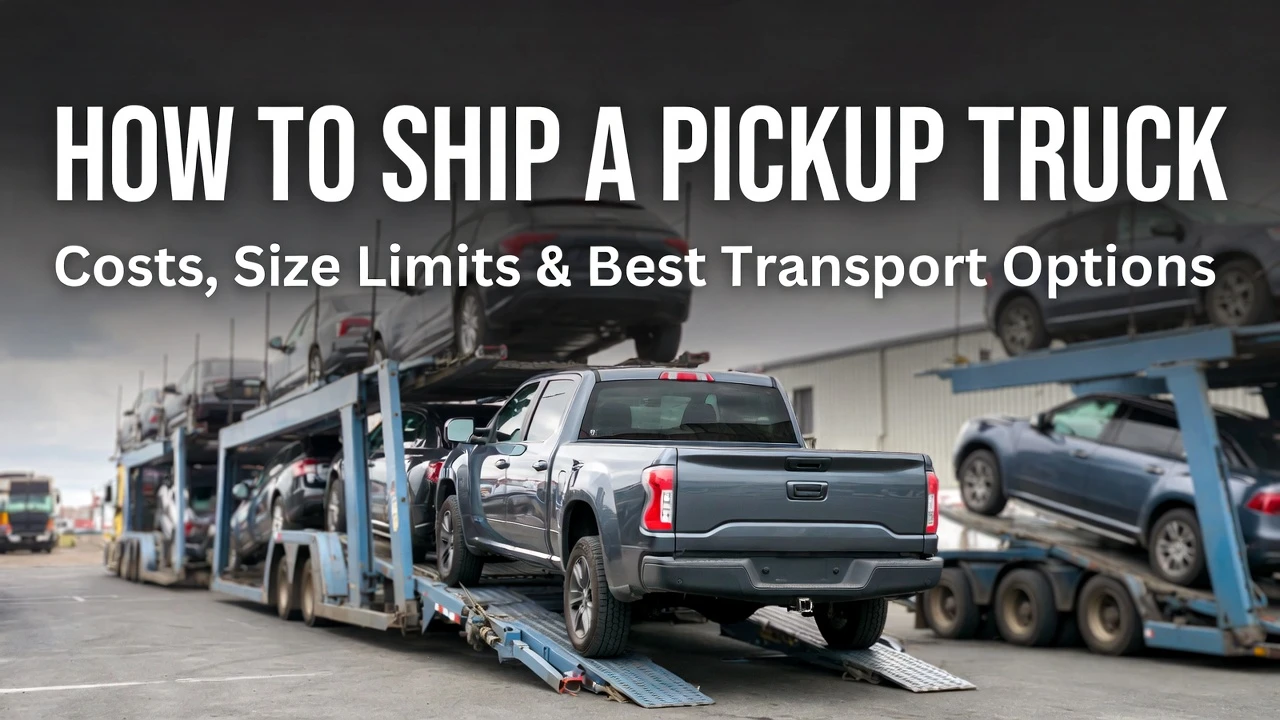
The process of pickup truck auto transport involves selecting a licensed carrier, preparing your truck (quarter-tank fuel, securing loose items, documenting condition), and understanding size restrictions that affect pricing and carrier availability. Modifications like lift kits, oversized tires, or extended cabs can increase costs by 15-30% if special equipment is required.
This complete guide covers pickup truck shipping costs by distance, how to transport lifted pickup trucks with modifications, size requirements, preparation steps, and choosing between open versus enclosed transport for your specific needs.
How Much Does Pickup Truck Transport Cost?
Pickup truck transport cost ranges from $600-$1,000 for 500-1,000 miles, $1,000-$1,500 for 1,000-2,000 miles, and $1,200-$2,000 for cross-country distances over 2,500 miles using open transport. Standard pickup trucks (F-150, Silverado, Ram 1500) cost 10-20% more than sedans, while lifted trucks or dually models add another 15-30% to base rates.
| Distance | Standard Pickup | Lifted/Modified | Timeline |
|---|---|---|---|
| 500 miles | $600-$800 | $700-$950 | 1-3 days |
| 1,000 miles | $800-$1,200 | $950-$1,400 | 2-4 days |
| 1,500 miles | $1,000-$1,500 | $1,200-$1,750 | 3-5 days |
| 2,000 miles | $1,200-$1,700 | $1,400-$2,000 | 4-7 days |
| 2,500+ miles | $1,400-$2,000 | $1,650-$2,400 | 5-10 days |
Size-based pricing factors: Full-size trucks (F-250, Silverado 2500, Ram 2500) cost $100-$200 more than half-ton models due to increased weight. Crew cab configurations add $50-$100 compared to regular cabs. Long bed trucks may incur additional fees if they exceed standard trailer space allocations.
Enclosed vs open transport: Enclosed transport costs 40-60% more ($1,000-$1,200 for 1,000 miles) but protects custom paint, lift kits, and premium trucks from weather and road debris. Most standard work trucks ship via open transport, while show trucks, restored classics, or heavily modified pickups benefit from enclosed protection.
For complete pricing details across all vehicle types, see our comprehensive car shipping cost guide with distance-based calculators.
What Size Limits Affect Pickup Truck Shipping?
Standard car carriers accommodate pickup trucks up to 7-8 feet tall, 7 feet wide, and 22 feet long. Exceeding these dimensions requires oversized vehicle transport with specialized equipment, adding 20-40% to shipping costs. Height is the most common issue, especially with lifted trucks that push beyond the 7-foot maximum for standard trailers.
Height restrictions: Stock pickup trucks (5.5-6.5 feet tall) fit standard carriers easily. Lifted trucks with 4-inch lifts typically remain under 7 feet, but 6+ inch lifts, large tires (35″+), or roof racks often exceed height limits. Carriers charge premiums or use lowboy trailers for trucks over 8 feet tall.
Length considerations: Regular cab short bed trucks (18-19 feet) and crew cab long bed models (20-21 feet) fit standard carriers. Extended cab with 8-foot bed combinations approaching 23 feet may require end positions on trailers or specialized handling, potentially adding $100-$200 to shipping costs.
Width and weight: Dually trucks (8 feet wide with dual rear wheels) and heavy-duty models (8,000+ pounds) may need special accommodations. Most carriers handle standard width trucks (6.5-7 feet) without issues, but aftermarket accessories like running boards, wheel spacers, or wide fenders can push dimensions beyond limits.
Ground clearance: Lowered trucks or those with low front air dams may scrape on loading ramps. Conversely, high ground clearance (14″+) on lifted trucks can make loading difficult without specialized ramps. Inform carriers about modifications to ensure they bring appropriate equipment.
How Do You Transport a Lifted Pickup Truck?
To transport lifted pickup truck models, measure total height with the lift (including tires and roof accessories), inform carriers about modifications during quoting, expect 15-30% higher costs for oversized accommodation, and consider enclosed transport for expensive lift kits and custom work. Trucks under 8 feet total height typically ship on standard carriers with minor upcharges.
Measurement requirements: Measure from ground to highest point (usually roof, light bar, or antenna). Include tire size in calculations—35″ tires add 3-4 inches versus stock. Most carriers accommodate lifts up to 6 inches on standard equipment, while larger lifts need specialized trailers.
Documentation needs: Photograph your lifted truck from all angles before shipping, documenting the lift kit, custom wheels/tires, and any vulnerable accessories. This protects you if damage occurs during loading, when clearance issues are most likely to cause scrapes or scratches.
Specialized carriers: Some companies specialize in oversized vehicle transport, handling lifted trucks, monster trucks, and modified vehicles regularly. These specialists cost 20-30% more but have experience and proper equipment preventing damage to expensive modifications.
Insurance considerations: Verify your carrier’s insurance covers aftermarket modifications. Standard cargo insurance may not fully cover custom lift kits, wheels, tires, or accessories. Consider supplemental insurance for heavily modified trucks worth $50,000+.
For more details on oversized vehicle requirements, review our oversized vehicle shipping guide covering dimensions and special transport needs.
Should You Choose Open or Enclosed Transport for Your Pickup?
Choose open transport for standard work trucks, daily drivers, and vehicles where cosmetic perfection isn’t critical, saving 40-60% compared to enclosed. Select enclosed transport for restored classics, show trucks, heavily customized pickups, or when protecting expensive lift kits, custom paint, and accessories justifies the premium cost.
Open transport advantages: Lower cost ($600-$2,000 cross-country), faster carrier availability (1-3 days typically), and suitable for 90% of pickup trucks including F-150s, Silverados, and Rams used as work vehicles. Your truck ships on open-air trailers (same type delivering new trucks to dealerships), exposed to weather but fully insured.
Enclosed transport benefits: Complete weather protection, lower-capacity trailers with more careful handling, reduced road debris exposure, and peace of mind for show-quality trucks or extensive modifications. Worth the premium ($1,000-$3,000 cross-country) for trucks where appearance matters significantly or customization exceeds $10,000+.
Decision factors: Consider truck value, modification investment, and purpose. A $35,000 work truck with 150,000 miles ships fine via open transport. A $65,000 Raptor with custom paint, $15,000 in modifications, and show-quality finish deserves enclosed protection despite higher costs.
Compare transport options in detail in our open vs enclosed shipping guide with pros, cons, and cost comparisons.
How Do You Prepare a Pickup Truck for Shipping?
Prepare your pickup truck by cleaning thoroughly for condition documentation, removing or securing loose items (toolboxes, bed covers, tonneau covers), maintaining quarter-tank fuel, documenting existing damage with photos, securing or removing custom accessories, and verifying insurance coverage with your carrier.
Bed preparation: Remove all items from the truck bed including tools, equipment, tie-downs, and cargo. Most carriers prohibit personal items, and anything left in the bed isn’t insured. Secure or remove tonneau covers, bed caps, and toolboxes—or inform carriers if they’re permanently mounted.
Accessory management: Remove or secure loose accessories like CB antennas, light bars, bug shields, and bed extenders. Retract or remove side mirrors if possible (check carrier requirements). Document any accessories that remain attached, noting their condition before shipping.
Mechanical readiness: Ensure your truck starts reliably and drives onto carrier trailers. Check tire pressure, test brakes, and fix any fluid leaks. Carriers may refuse trucks with significant mechanical issues or active leaks that could damage other vehicles on the transport trailer.
Documentation: Take 20-30 photos from all angles, including close-ups of existing scratches, dents, or modifications. Photograph odometer showing exact mileage and fuel gauge showing level. These photos protect you in damage disputes and insurance claims.
For complete preparation steps, follow our detailed vehicle preparation checklist covering every requirement.
What Are the Best Transport Options for Different Pickup Trucks?
Best pickup truck auto transport options vary by truck type: standard half-ton trucks (F-150, Silverado 1500, Ram 1500) ship easily via any carrier using open transport; lifted trucks under 8 feet use standard carriers with minor upcharges; trucks over 8 feet tall need specialized oversized carriers; and show trucks or heavily modified models benefit from enclosed transport despite premium pricing.
| Truck Type | Best Transport | Average Cost (1,000 mi) | Considerations |
|---|---|---|---|
| Stock Half-Ton | Open transport | $800-$1,200 | Standard pricing, easy booking |
| Lifted (Under 8 ft) | Open transport | $950-$1,400 | Minor upcharge, most carriers |
| Lifted (Over 8 ft) | Specialized open | $1,200-$1,600 | Lowboy trailers, limited carriers |
| Show Truck | Enclosed transport | $1,200-$1,800 | Weather protection, careful handling |
| Dually/Heavy-Duty | Open/Specialized | $1,000-$1,500 | Weight/width considerations |
Work trucks: F-150s, Silverado 1500s, and Ram 1500s used as daily drivers ship perfectly via standard open transport. Focus on cost savings rather than premium protection for trucks with typical wear and tear from work use.
Modified trucks: Trucks with lift kits, custom wheels, upgraded suspension, or appearance packages need carriers experienced with modifications. Verify insurance covers aftermarket parts and consider enclosed transport if modifications exceed $5,000-$10,000.
Classic/vintage trucks: Restored F-100s, classic Chevys, or vintage Dodges deserve enclosed transport regardless of distance. These irreplaceable vehicles need maximum protection from weather, debris, and the elements during shipping.
Conclusion: Shipping Your Pickup Truck Successfully
Knowing how to ship a pickup truck means understanding that standard models cost $600-$2,000 depending on distance, modified trucks need special arrangements if over 8 feet tall, and choosing the right transport method (open vs enclosed) depends on your truck’s value and condition. Proper preparation, accurate measurements, and selecting experienced carriers ensure smooth pickup truck auto transport.
Key takeaways: Get quotes from 3-5 carriers, measure modified trucks accurately, prepare your vehicle properly, and choose transport type based on truck value and modifications. Book 2-3 weeks ahead for best availability and pricing.
Next steps: Request quotes specifying your truck’s exact dimensions and modifications, verify carrier insurance and licensing, and review customer feedback before booking. When shipping a pickup truck across country, transparency about modifications prevents pickup delays and ensures proper handling.
For carrier recommendations and company comparisons, explore our best auto transport companies guide featuring top-rated pickup truck shippers.
Frequently Asked Questions
How much does it cost to ship a pickup truck?
Pickup truck transport cost ranges from $600-$1,000 for 500-1,000 miles, $1,000-$1,500 for 1,000-2,000 miles, and $1,400-$2,000 for cross-country distances. Standard trucks cost 10-20% more than sedans, while lifted or modified models add another 15-30%.
Can you transport a lifted pickup truck?
Yes, but lifted trucks over 8 feet total height require specialized carriers with lowboy trailers, costing 20-40% more. Measure total height including lift, tires, and roof accessories, then inform carriers during quoting to ensure proper equipment and avoid pickup rejection.
What size pickup truck can be shipped on standard carriers?
Standard carriers accommodate pickup trucks up to 7-8 feet tall, 7 feet wide, and 22 feet long. Most stock F-150s, Silverados, and Rams fit easily. Lifted trucks with 4-inch lifts typically stay under limits, while 6+ inch lifts often require specialized transport.
Should I use open or enclosed transport for my pickup truck?
Use open transport for standard work trucks and daily drivers, saving 40-60% on costs. Choose enclosed transport for show trucks, heavily modified pickups, restored classics, or when protecting expensive lift kits and custom work justifies the premium pricing.
How long does it take to ship a pickup truck across country?
Shipping a pickup truck across country takes 5-10 days for 2,500+ mile distances, with 1-3 days for carrier assignment when booking in advance. Popular routes see faster service, while uncommon routes or modified trucks requiring specialized carriers may take longer.
Do I need to remove accessories from my pickup truck?
Remove or secure loose accessories like toolboxes, tonneau covers, antennas, light bars, and bed cargo. Permanently mounted items (running boards, bed liners) can stay but should be documented with photos. Empty the truck bed completely—personal items aren’t insured.
What’s the cost difference between shipping a standard vs lifted truck?
Lifted trucks cost 15-30% more than standard models. A stock F-150 costing $1,000 to ship 1,000 miles would cost $1,150-$1,300 with a lift kit. Lifts over 6 inches pushing total height above 8 feet can add 30-40% due to specialized carrier requirements.
Are dually pickup trucks more expensive to ship?
Yes, dually trucks (dual rear wheels) cost $100-$200 more due to 8-foot width requiring special trailer positioning. Their extra weight (often 8,000+ pounds) also affects pricing. Most carriers accommodate duallys on standard equipment with minor upcharges rather than specialized transport.