
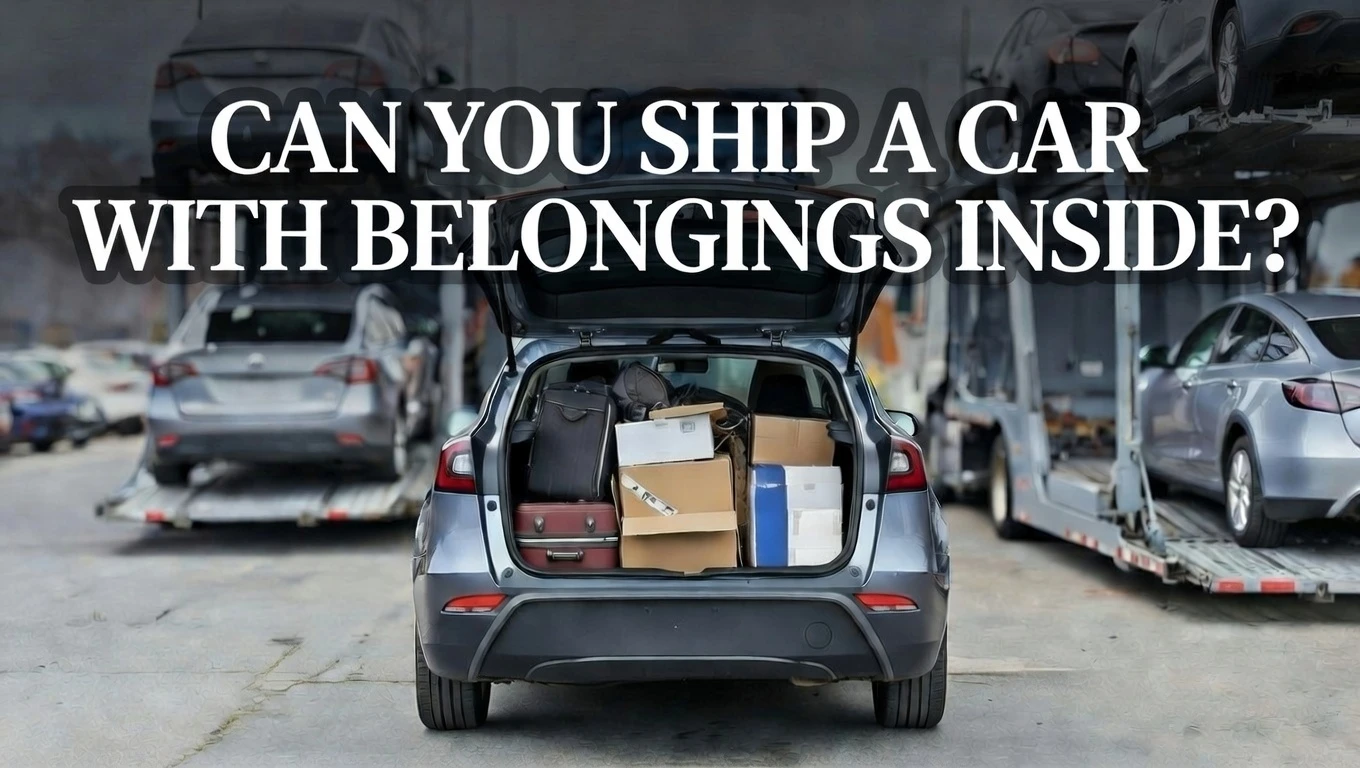
The question “can I put stuff in my car when shipping” has a nuanced answer: technically possible with some carriers, but strongly discouraged due to liability issues, weight restrictions, and DOT regulations treating personal items as separate cargo requiring different licensing and insurance coverage.
This guide explains carrier policies on shipping car and belongings together, weight limits, what items are prohibited, insurance implications, and safer alternatives for transporting personal items during long-distance moves.
Why Do Most Carriers Prohibit Belongings in Shipped Cars?
Most carriers prohibit or restrict belongings because their cargo insurance covers vehicles only (not contents), DOT regulations classify personal items as separate cargo requiring freight licenses, added weight affects fuel costs and legal load limits, and loose items can damage vehicle interiors during transport.
Insurance coverage gaps: Auto transport cargo insurance covers vehicle damage during shipping but explicitly excludes personal belongings. If your laptop, jewelry, or other items are stolen or damaged during transport, you have zero recourse. Carriers’ insurance policies contain specific exclusions for “contents” or “personal property” protecting them from liability.
DOT regulatory issues: The Department of Transportation classifies personal belongings as household goods requiring separate freight carrier licensing. Auto transport companies hold vehicle carrier licenses, not household goods licenses. Shipping belongings in cars technically violates their operating authority, creating legal liability carriers avoid.
Weight restrictions: Transport trucks calculate load weight carefully to comply with highway weight limits. Adding 100 pounds per vehicle across a 10-car trailer adds 1,000 pounds, potentially exceeding legal limits and triggering fines. Carriers price shipping based on vehicle weight alone, so extra weight cuts into their profit margins.
Interior damage risks: Items shifting during transport can scratch leather seats, break sun visors, damage dashboards, or crack windshields from the inside. Carriers then face disputes about whether damage existed before shipping or resulted from unsecured items, complicating their insurance claims.
What Are the Rules for Shipping Car With Personal Items?
Carriers allowing personal items typically enforce strict rules: maximum 100 pounds total weight, items must be in trunk only (not cabin), nothing visible through windows, no prohibited items (firearms, hazardous materials, alcohol), and signed liability waivers acknowledging zero insurance coverage for belongings.
| Rule | Requirement | Reason |
|---|---|---|
| Weight Limit | 100 lbs maximum | Vehicle weight calculations, legal load limits |
| Location | Trunk only, nothing in cabin | Prevents interior damage, theft visibility |
| Visibility | Nothing visible through windows | Reduces theft risk, professional appearance |
| Insurance | Zero coverage for belongings | Not included in cargo insurance policy |
| Prohibited Items | No valuables, firearms, hazardous materials | Safety, legal, theft prevention |
Trunk-only requirement: Items must be packed in the trunk, below window level, completely out of sight. This prevents theft temptation when vehicles are on open trailers or in carrier yards. Items in the cabin shift more easily during loading/unloading, causing interior damage carriers won’t accept responsibility for.
Prohibited items list: Never pack firearms, ammunition, explosives, flammable liquids, pressurized containers, perishable food, plants, pets, or irreplaceable documents. Illegal items can result in criminal charges, while valuable items risk theft with zero insurance coverage or legal recourse.
Liability waivers: Carriers require signed acknowledgments that you understand belongings aren’t insured and the carrier assumes zero liability for loss, damage, or theft. This waiver is legally enforceable—you cannot sue for compensation if items disappear or are damaged during transport.
Carrier variations: Policies vary significantly by company. Some prohibit all personal items completely, others allow 100-200 pounds, and a few don’t enforce restrictions but still exclude belongings from insurance. Always ask your specific carrier about their policy before assuming you can ship car with household items inside.
What Items Are Prohibited in Shipped Cars?
Prohibited items when shipping car and belongings together include firearms and ammunition, hazardous materials (gasoline, propane, cleaning chemicals), high-value items (jewelry, cash, electronics over $500), perishables, plants, alcohol, prescription drugs, and legal documents (titles, passports, birth certificates).
Firearms and ammunition: Federal law restricts firearm transport across state lines. Carriers refuse all weapons to avoid legal complications and liability. Transport firearms separately via licensed FFL dealers or ship them yourself following ATF regulations.
Hazardous materials: Gasoline cans, propane tanks, paint, cleaning chemicals, batteries, and aerosols are strictly prohibited due to fire and explosion risks during transport. Even empty containers retaining fumes can ignite, creating catastrophic accidents on transport trucks.
High-value items: Laptops, tablets, jewelry, cash, collectibles, and other expensive items face high theft risk. With zero insurance coverage, losing a $2,000 laptop means complete loss with no compensation. Ship valuables separately via insured methods or transport them personally.
Legal documents: Never ship passports, birth certificates, vehicle titles, insurance documents, or other irreplaceable papers. Losing these during transport creates weeks of replacement hassles and potential identity theft risks. Keep all important documents with you during moves.
What Happens If You Break the Rules?
Breaking rules by putting prohibited items or excess weight in your car during shipping can result in carrier rejection at pickup (causing delays and rescheduling fees), denied insurance claims if vehicle damage occurs, confiscation of illegal items by authorities, and in extreme cases, criminal charges for transporting prohibited materials across state lines.
Pickup rejection: Carriers inspect vehicles before loading. Discovering prohibited items or excessive weight results in immediate rejection until you remove the offending contents. This causes 2-4 week delays for rescheduling, potential cancellation fees ($50-$200), and scrambling to find storage or alternative transport for the rejected items.
Insurance claim denial: If your vehicle is damaged during transport and the carrier discovers you violated their belongings policy, they may deny your entire damage claim. Even legitimate vehicle damage (scratched paint, dented panels) becomes your financial responsibility if you breached the shipping contract by including prohibited items.
Theft and loss: Items left in vehicles are easy targets for theft when cars sit in carrier yards or on open trailers. With zero insurance coverage and signed liability waivers, you have no legal recourse. The carrier isn’t liable, your homeowner’s insurance likely excludes items in vehicles during commercial transport, and you simply lose everything.
Legal consequences: Transporting firearms across state lines without proper licensing, shipping hazardous materials on commercial vehicles, or moving illegal substances can result in federal criminal charges. These aren’t minor violations—they carry potential fines, felony records, and even imprisonment depending on the materials involved.
What Are Safer Alternatives to Shipping Belongings in Your Car?
Safer alternatives to ship car with household items inside include professional moving companies with full insurance coverage, shipping belongings separately via freight services, portable storage containers (PODS, U-Pack), checked airline baggage for valuables, or driving yourself if you need belongings to arrive with your vehicle.
Professional movers: Full-service moving companies provide comprehensive insurance covering your belongings during transport. While more expensive ($2,000-$5,000 for cross-country moves), you gain peace of mind and legal recourse if items are damaged or lost. Movers handle packing, loading, and delivery with liability coverage protecting your investment.
Freight shipping services: Companies like UPS Freight, FedEx Freight, or specialized moving freight services ship boxes and crates with tracking and insurance. Ship non-valuable items (clothes, books, kitchenware) this way for $300-$800 cross-country, insuring contents for actual value rather than risking complete loss.
Portable storage containers: PODS, U-Pack, and similar services deliver containers to your home, let you load at your pace, then transport to your destination. You maintain control over packing and can insure contents properly. Costs run $1,500-$3,500 for cross-country moves but include insurance coverage auto transport lacks.
Driving yourself: If you need immediate access to belongings and can’t risk separation, consider driving one vehicle while shipping another. This costs more in gas ($300-$500 cross-country), time (3-5 days driving), and wear/tear, but gives you complete control and zero risk of belongings theft or loss.
Airline baggage: For valuable items like electronics, jewelry, or important documents, check bags on your flight or carry them on. Airlines provide liability coverage for checked bags (typically $3,500), and you maintain possession of irreplaceable items rather than risking them in an uninsured car trunk.
For complete vehicle preparation guidance, see our car shipping preparation guide covering proper procedures.
How Much Weight Can You Put in a Car During Shipping?
Most carriers allowing personal items limit weight to 100 pounds maximum, though some permit up to 200 pounds. This weight must be in the trunk only, secured to prevent shifting, and evenly distributed to avoid vehicle handling issues during loading and unloading.
Weight verification: Carriers may weigh vehicles before loading to verify compliance. Exceeding stated limits results in rejection or additional fees ($50-$150 for overweight vehicles). Be honest about what you’re packing—getting caught with excess weight causes delays and extra costs.
Proper packing technique: Use soft bags rather than hard suitcases that can damage trunk interiors. Pack heavy items on the bottom, lighter on top. Fill empty spaces to prevent shifting. Avoid stacking items that can topple and damage trunk lining or spare tire compartments.
Disclosure requirements: Inform your carrier if you’re including any items in the trunk. Hiding belongings and having them discovered during inspection creates trust issues and may result in complete shipment refusal. Transparency prevents problems and ensures you understand the risks.
Conclusion: Should You Ship Personal Items With Your Car?
Can you ship a car with belongings inside? While some carriers permit limited items (100 lbs in trunk), the risks outweigh benefits: zero insurance coverage, potential theft, possible carrier rejection, and insurance claim denial if vehicle damage occurs. The safest approach is shipping your vehicle empty and transporting belongings separately via properly insured methods.
Best practices: If you must include items, pack only low-value, replaceable things (clothes, linens, non-breakables) in the trunk, staying well under 100 pounds. Never include valuables, important documents, or prohibited items. Sign all liability waivers understanding you accept complete loss risk.
Recommended approach: Ship your car empty and use professional movers, freight services, or portable storage for belongings. The extra cost ($300-$800) for separate shipping provides insurance coverage, legal recourse, and peace of mind that “saving money” by stuffing your car trunk cannot match.
For choosing reliable carriers with clear belongings policies, review our best car shipping companies comparison and cost guide.
Frequently Asked Questions
Can you ship a car with belongings inside?
Some carriers allow up to 100 pounds of personal items in the trunk only, but these items aren’t covered by insurance. Many carriers prohibit belongings entirely due to liability, DOT regulations, and weight restrictions. Items in shipped cars risk theft or damage with zero compensation.
Can I put stuff in my car when shipping it?
Most carriers allow limited items (100 lbs max) in the trunk only if disclosed beforehand, but they’re not insured. You must sign liability waivers accepting complete loss risk. Never put valuables, firearms, hazardous materials, or important documents in your car during shipping.
What items are prohibited when shipping a car?
Prohibited items include firearms, ammunition, hazardous materials (gasoline, propane, chemicals), high-value items (jewelry, electronics, cash), perishables, plants, alcohol, prescription drugs, and legal documents. These items risk confiscation, criminal charges, or complete loss without compensation.
Are personal items insured when shipping a car?
No, personal items in shipped cars have zero insurance coverage. Cargo insurance covers vehicle damage only, explicitly excluding contents or belongings. Carriers require signed waivers acknowledging they’re not liable for theft, loss, or damage to anything packed in your vehicle.
What happens if I exceed the weight limit?
Exceeding weight limits (typically 100 lbs) results in carrier rejection at pickup, requiring you to remove excess items before shipping. This causes 2-4 week delays, potential cancellation fees ($50-$200), and scrambling to find alternative transport or storage for rejected items.
Can I ship household items in my car trunk?
Some carriers allow household items (clothes, linens, books) in the trunk up to 100 lbs if disclosed beforehand, but they’re not insured. Better alternatives include professional movers with full insurance ($2,000-$5,000), freight shipping ($300-$800), or portable storage containers.
What’s the safest way to transport belongings during a move?
The safest way is shipping your car empty and using professional movers, freight services, or portable storage (PODS) for belongings. These methods provide insurance coverage, tracking, and legal recourse if items are damaged. Ship valuables via airline baggage or transport them personally.
Why don’t car shipping companies allow belongings?
Car shipping companies restrict belongings because their cargo insurance covers vehicles only (not contents), DOT regulations classify personal items as separate cargo requiring different licenses, added weight affects costs and legal limits, and loose items can damage vehicle interiors during transport.