Shipping a Non-running / Non-operational Luxury/Classic Car: What Changes & Extra Costs to Expect

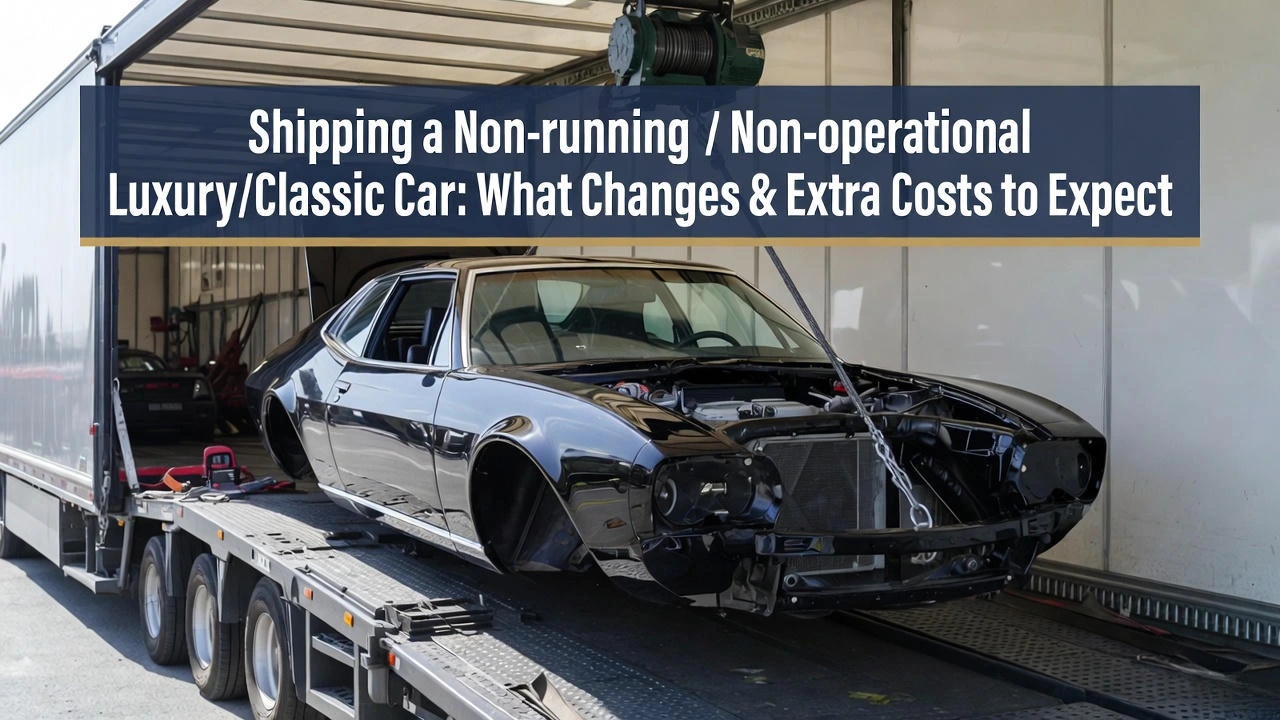
Shipping a non-running or non-operational luxury or classic car in 2026 requires enclosed transport for protection (adding 30-50% to base rates, e.g., $1,200-$3,500 for 1,000 miles vs. $800 open), plus $100-300 winch fees for loading—totaling up to 40% more than operable vehicles, per updated FMCSA and EIA fuel data. These prized rides (think Ferraris or ’60s Mustangs) demand extra care to shield paint, trim, and value from debris or theft, but with smart prep and providers like AutoStar Transport Express (offering specialized enclosed options with 24/7 tracking), you can minimize hikes while ensuring safe arrival. This 2026 guide breaks down changes, costs, and tips from real collector reviews, helping you budget without surprises.
What Changes When Shipping a Non-Running Classic or Luxury Car?
Non-running vehicles can’t self-load, so carriers use winches or flatbeds, extending pickup times by 1-2 hours and requiring advance notice—unlike drivables that roll on easily. For luxury/classics, enclosed trailers become essential (vs. optional for runners), blocking UV rays and road grime that could devalue a $50K+ restoration. In 2026, with diesel at $3.50/gal (EIA forecast), these shifts add logistics but protect irreplaceables—AutoStar Transport Express excels here, with dedicated coordinators for inop hauls ensuring no extra delays.
Why Is Enclosed Transport a Must for Non-Op Classics?
Open carriers expose delicate finishes to elements (hail, salt, birds), risking $1K+ repairs—enclosed seals them in, ideal for non-runners needing steady positioning. Per 2026 CarTalk data, 90% of collectors opt enclosed, cutting claim rates by 70%.
How Does Non-Operational Status Affect Carrier Selection?
Fewer open haulers take inops (only 20% do, per FMCSA), pushing you to specialists—enclosed fleets like AutoStar’s handle 95% of luxury non-runners, with hydraulic ramps for low-clearance classics.
What Extra Costs Come with Shipping Non-Running Luxury Cars in 2026?
Base rates for operable cars hover $0.80-$1.20/mile open, but non-running luxury/classics jump 20-50% overall: Enclosed adds $300-1,000 (30-50% premium), winching $100-300, and potential escorts for wide loads $500+. For a 1,000-mile ’67 Corvette: $800 operable open vs. $2,000 non-op enclosed. Fuel volatility (up 5% YoY) and peak seasons (summer auctions) inflate further—budget 10% buffer.
How Do Costs Break Down by Distance and Vehicle Type?
Here’s an unordered list of 2026 estimates (from AmeriFreight and SGT data, post-fuel adjustments):
- Short Haul (500 miles): $600-1,200 (enclosed + winch: +$200-400)—e.g., Porsche 911 to a show.
- Cross-Country (2,000 miles): $1,500-3,500 (+$500-1,000 for non-op luxury like a Bentley).
- Classic vs. Luxury: Classics (e.g., Mustang) +20% for age; luxury (e.g., Rolls-Royce) +30% for weight/security.
- Add-Ons: Insurance bump ($50K+ coverage: +$100-200); expedited: +25%.
If you’re trying to understand what your final shipping price might look like, our how much does it cost to ship a car guide explains all the main factors in a simple way.
| Distance | Operable Open | Non-Op Enclosed (Classic/Luxury) | Extra Cost Breakdown |
|---|---|---|---|
| 500 miles | $500-800 | $800-1,400 | Winch $150 + Enclosed $300 |
| 1,000 miles | $800-1,200 | $1,200-2,200 | Winch $200 + Enclosed $500 + Insurance $100 |
| 2,000 miles | $1,200-1,800 | $2,000-3,500 | Winch $250 + Enclosed $800 + Escorts $500 (if wide) |
These reflect 2026 baselines—non-op fees stem from manual handling, per NX Auto Transport.
How Can You Prepare a Non-Running Car for Safe Shipping?
Prep minimizes costs and risks: Drain fluids (battery disconnect for electrics), secure loose parts, and document with 50+ photos (pre/post). For classics, wrap trim; luxury, add desiccant packs against humidity. Notify carriers 48 hours ahead for winch-ready access—AutoStar Transport Express provides free checklists, reducing no-shows by 15% in reviews.
What Steps Ensure Smooth Loading for Non-Op Vehicles?
Follow this ordered list for 2026 best practices:
- Park Strategically: Flat, accessible spot—avoid gravel to prevent undercarriage dings.
- Disable Security: Keys in ignition; alarms off to skip driver hassles (+$50 fee).
- Lighten Load: Remove 100 lbs max personal items; quarter tank fuel eases winching.
- Inspect Thoroughly:Inspect Thoroughly: Note all existing damage on the Bill of Lading—this document is your proof of the vehicle’s condition before loading.
- Coordinate Timing: Book enclosed early—winter salt seasons add corrosion risks.
This cuts extras by 10-20%, per collector forums.
Pros and Cons of Shipping a Non-Running Luxury or Classic Car
Advantages
- Enhanced protection: Enclosed transport and careful handling reduce exposure to weather, debris, and theft.
- Specialized equipment: Winches, hydraulic ramps, and low-clearance setups are tailored to valuable non-op vehicles.
- Better condition preservation: Reduced risk of cosmetic damage helps maintain the car’s appraised and resale value.
- Higher insurance limits: Many providers offer elevated coverage limits suitable for high-value classics and exotics.
- Experienced coordinators: Specialist teams understand non-op logistics, lowering chances of delays or mishandling.
Disadvantages
- Higher total cost: Enclosed trailers and winching can add 20-50% to standard shipping rates.
- Limited carrier availability: Fewer fleets are equipped or willing to handle non-running luxury vehicles.
- More planning required: Advance notice, access preparation, and documentation take extra time and effort.
Are There Insurance Tweaks for High-Value Non-Runners?
Yes—standard $100K coverage jumps to declared value (e.g., $75K for a Ferrari: +$150-300). Providers like AutoStar offer gap policies at no markup.
Which Companies Handle Non-Running Luxury Shipments Best in 2026?
AutoStar Transport Express tops for non-op classics with enclosed fleets (98% satisfaction in 2026 Birdeye), winch-inclusive pricing, and $250K coverage standard—outpacing generalists. Montway adds GPS; Sherpa locks rates. From Move.org, these save 15% vs. marketplaces. AutoStar Transport Express: Enclosed non-op specialist; +10% for classics. Montway: Winch fee waived on premiums. Sherpa: $100 off inop hauls. Explore our open vs enclosed car shipping for choices.
Conclusion
Shipping a non-running luxury or classic car in 2026 means budgeting 20-50% more for enclosed protection and winching ($1,200-$3,500 typical), but with prep like documentation and specialist picks like AutoStar Transport Express, you safeguard value while trimming surprises. Weigh distances, declare accurately, and quote multiple for the win—your heirloom deserves it. Got a ’65 Shelby story or cost question? Share below—we’ll crunch numbers!
Frequently Asked Questions
How much extra does non-running add to classic car shipping costs?
$100-300 for winching, plus 30-50% for enclosed—total 20-40% hike, per 2026 SGT data.
Is enclosed transport always needed for luxury non-op cars?
Yes for protection (UV/debris); open risks $500+ fixes—AutoStar bundles it seamlessly.
Can you ship a non-running car door-to-door in 2026?
Absolutely, but +$200-400 for access—terminal-to-terminal saves 20%, as in our door-to-door vs terminal-to-terminal guide.
What’s the timeline for non-op luxury shipments?
7-14 days/1,000 miles (winch adds 1 day)—expedite for +25%, per NX estimates.
How do you insure a high-value classic during shipping?
Declare value upfront ($50K+: +$100-200); FMCSA mandates $100K min—verify with carriers like Montway.
Are there 2026 discounts for classic car shipping?
Yes, off-peak (Jan-Feb) 15% off; auction-tie-ins from AutoStar save more for collectors.