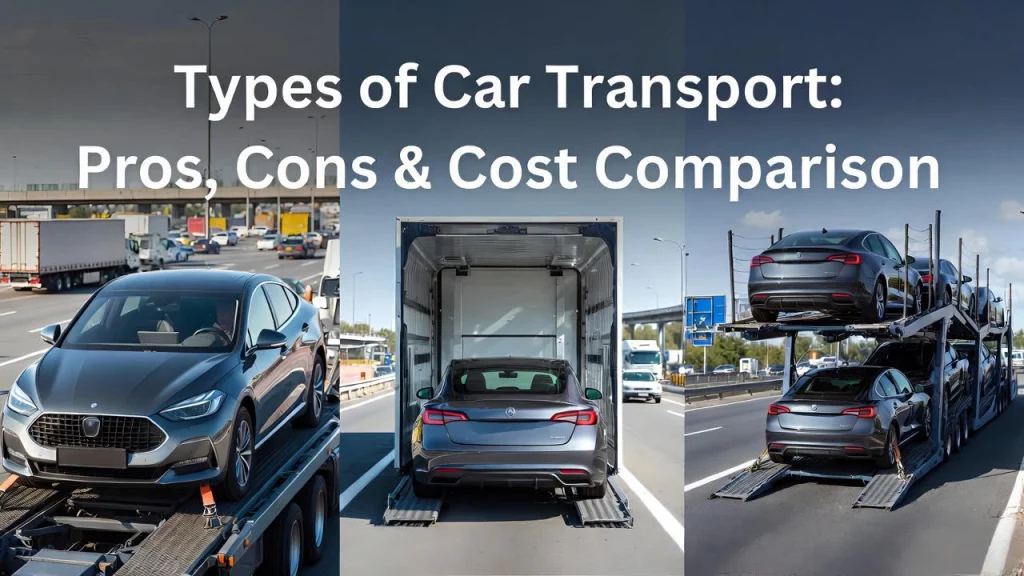
The main types of car transport are open carrier, enclosed carrier, door-to-door, terminal-to-terminal, and RoRo (Roll-on/Roll-off). Each has distinct pros and cons: open transport is the most affordable ($500–$1,100) but exposes your car to weather; enclosed costs more ($900–$1,500) but offers full protection for luxury vehicles. Door-to-door is convenient but pricier; terminal-to-terminal saves money but requires extra effort. RoRo handles overseas moves at $1,000–$2,500 with basic protection. Below, we compare each method’s advantages, drawbacks, and pricing so you can choose the right option for your vehicle and budget.
What Is Open Car Transport?
Open transport moves your vehicle on an uncovered trailer alongside other cars. It’s the most common and affordable shipping method, used by dealerships and individuals alike.
Cost: $500–$1,100 (varies by distance)
Pros and Cons of Open Car Transport
Advantages
- Lowest cost: Typically the cheapest way to ship a vehicle.
- High availability: Most common equipment, so easier to schedule.
- Suitable for daily drivers: Works well for standard, non-luxury vehicles.
- Faster booking: More carriers mean quicker pickup options.
- Industry standard: Used by dealers and auctions nationwide.
Disadvantages
- Exposure to elements: Car is open to rain, dust, and road grime.
- Minor cosmetic risk: Small chips or scratches are possible.
- Less ideal for high-end cars: Not recommended for exotics or collectibles.
Best for: Everyday sedans, trucks, and SUVs where budget matters most.
What Is Enclosed Car Transport?
Enclosed transport uses a covered trailer that fully protects your vehicle from external elements. Carriers typically hold 2–6 vehicles in a secured environment.
Cost: $900–$1,500 (40–60% more than open)
Pros and Cons of Enclosed Car Transport
Advantages
- Maximum protection: Shields against weather, rocks, and road debris.
- Ideal for high-value vehicles: Best choice for exotics, classics, and show cars.
- Higher insurance limits: Policies often cover more than standard open carriers.
- Clean arrival: Car typically arrives in near-showroom condition.
- Specialized handling: Drivers are often experienced with premium vehicles.
Disadvantages
- Higher cost: Usually 40–60% more than open transport.
- Limited capacity: Fewer enclosed trailers on the road.
- Longer lead times: May need to book further in advance.
Best for: Luxury cars, classics, exotics, or any vehicle over $50,000 in value.
What Is Door-to-Door Car Shipping?
Door-to-door service means the carrier picks up your vehicle from your location and delivers it directly to your destination address.
Cost: $100–$300 more than terminal shipping
Pros and Cons of Door-to-Door Car Shipping
Advantages
- Highest convenience: Pickup and delivery close to your chosen addresses.
- Less vehicle handling: Fewer transfers reduce risk of damage.
- Time-saving: No extra trips to terminals or storage lots.
- Great for long-distance moves: Simplifies cross-country relocation.
- Better for busy owners: Ideal if your schedule is tight.
Disadvantages
- Higher overall cost: Typically $100–$300 more than terminal options.
- Access limitations: Carriers may need alternative meeting spots in tight neighborhoods.
- Less flexibility in timing: You must be available at pickup and drop-off.
Best for: Anyone prioritizing convenience over cost savings.
What Is Terminal-to-Terminal Car Shipping?
Terminal-to-terminal shipping requires you to drop off your car at one facility and pick it up at another near your destination.
Cost: $100–$300 less than door-to-door
Pros and Cons of Terminal-to-Terminal Car Shipping
Advantages
- Lower pricing: Often $100–$300 cheaper than door-to-door.
- Flexible timing: Terminals may offer wider drop-off and pickup windows.
- Helpful for hard-to-reach areas: Useful when carriers can’t access your street.
- Short-term storage options: Terminals can hold vehicles if needed.
- Budget friendly: Good choice if saving money is the top priority.
Disadvantages
- Extra logistics for you: You must arrange rides to and from terminals.
- Possible storage fees: Charges apply if you don’t pick up on time.
- Less convenient overall: More steps compared to door-to-door service.
Best for: Budget-conscious shippers near major transport hubs.
What Is RoRo Shipping?
RoRo (Roll-on/Roll-off) is used for overseas car shipping. Vehicles are driven directly onto a cargo ship and secured for ocean transit.
Cost: $1,000–$2,500 (international routes)
Pros and Cons of RoRo Shipping
Advantages
- Cost-effective overseas option: Usually cheaper than container shipping.
- Simplified loading: Vehicles are driven on and off the ship.
- Common on many routes: Widely used for international car transport.
- Good for standard vehicles: Ideal for typical cars and light trucks.
- Streamlined process: Designed specifically for wheeled cargo.
Disadvantages
- Exposure to sea air: Vehicles are not fully enclosed during transit.
- Limited to certain routes: Not used for domestic, overland U.S. moves.
- Fixed sailing schedules: Fewer departure dates than ground shipping.
Best for: International relocations or shipping to places like Puerto Rico, Hawaii, or overseas.
How Do Car Transport Costs Compare?
Here’s a quick comparison of all methods:
| Transport Type | Cost Range | Protection Level | Convenience |
|---|---|---|---|
| Open Carrier | $500–$1,100 | Basic | High |
| Enclosed Carrier | $900–$1,500 | Maximum | High |
| Door-to-Door | +$100–$300 | Varies | Maximum |
| Terminal-to-Terminal | −$100–$300 | Varies | Low |
| RoRo (Overseas) | $1,000–$2,500 | Basic | Medium |
Actual pricing depends on distance, vehicle size, season, and carrier availability. Get quotes from multiple car shipping companies to compare rates for your specific route.
Which Car Transport Type Should You Choose?
Your choice depends on three factors:
- Vehicle value: Cars worth over $50,000 or classics benefit from enclosed transport. Standard vehicles do fine with open carriers.
- Budget: If cost is the priority, open transport with terminal-to-terminal service offers the lowest price. Expect to pay more for enclosed and door-to-door convenience.
- Destination: Domestic moves use open or enclosed trailers. International or island shipments require RoRo or container shipping.
For most people shipping a regular car across the country, open carrier with door-to-door service hits the sweet spot between cost and convenience.
Conclusion
Choosing the right car transport type comes down to balancing protection, convenience, and budget. Open transport handles 90% of shipments affordably, while enclosed protects high-value vehicles. Door-to-door saves time; terminal-to-terminal saves money. For overseas moves, RoRo offers the most practical solution. Compare quotes from reputable carriers, verify their insurance coverage, and book 2–3 weeks ahead for the best rates.
Frequently Asked Questions
What is the cheapest way to ship a car?
Open carrier with terminal-to-terminal service is the cheapest option, typically saving $200–$400 compared to enclosed door-to-door shipping.
Is enclosed car transport worth the extra cost?
Yes, if your vehicle is worth over $50,000, is a classic, or has sentimental value. The extra $400–$600 provides full protection and peace of mind.
How far in advance should I book car transport?
Book 2–3 weeks ahead for the best rates and availability. Last-minute bookings (under 1 week) often cost 20–30% more.
Can I put personal items in my car during transport?
Most carriers allow a small box (under 100 lbs) in the trunk, but items aren’t covered by insurance. Check with your carrier first.
What’s the difference between a broker and a carrier?
Brokers connect you with carriers and handle logistics. Carriers own the trucks and physically transport your vehicle. Both are legitimate options—just verify licensing and reviews.