

Your choice depends on your needs. Cars offer the best fuel economy and lowest purchase price. Trucks provide hauling capability and durability. SUVs balance passenger space with versatility.
This guide breaks down the cheapest vehicles in each category and helps you decide which type fits your budget and lifestyle. Whether you’re a first-time buyer or looking to save money, you’ll find the best value options here.
What Are the Cheapest New Cars Under $25,000 in 2026?
The most affordable new cars in 2026 deliver excellent value without sacrificing reliability. These budget sedans and hatchbacks excel at fuel efficiency and low maintenance costs.
They’re perfect for daily commuting and city driving. Your wallet will thank you at the gas pump and during annual service visits.
| Car Model | Starting MSRP | MPG (City/Highway) | Key Feature |
|---|---|---|---|
| Nissan Versa | $17,140 | 32/40 | Most affordable sedan |
| Mitsubishi Mirage | $17,490 | 36/43 | Best fuel economy |
| Kia Rio | $17,975 | 33/41 | 10-year warranty |
| Hyundai Venue | $20,600 | 30/34 | Subcompact crossover |
| Nissan Sentra | $21,500 | 29/39 | Spacious interior |
The Nissan Versa takes the crown as the cheapest new car available. It offers surprising cabin space and modern safety features at an entry-level price.
The Mitsubishi Mirage delivers unbeatable fuel economy for budget-conscious buyers. Expect to spend only $1,000-$1,200 annually on fuel with normal driving habits.
These vehicles typically cost $200-$300 monthly on a 60-month loan with average credit. Add another $100-$150 for insurance.
Total ownership costs remain low thanks to excellent gas mileage and affordable parts. Routine maintenance runs significantly cheaper than luxury brands.
If you need to transport your vehicle across states, check our guide on how much it costs to ship a car.
Which Pickup Trucks Offer the Best Value Under $35,000?
Budget trucks in 2026 blend capability with affordability. These workhorses handle towing, hauling, and off-road adventures without breaking the bank.
They’re ideal for contractors, outdoor enthusiasts, and families needing utility. Modern budget trucks pack impressive technology and safety features.
| Truck Model | Starting MSRP | Towing Capacity | Payload |
|---|---|---|---|
| Ford Maverick | $27,500 | 4,000 lbs | 1,500 lbs |
| Hyundai Santa Cruz | $28,200 | 5,000 lbs | 1,611 lbs |
| Nissan Frontier | $31,640 | 6,720 lbs | 1,610 lbs |
| Toyota Tacoma | $32,920 | 6,800 lbs | 1,685 lbs |
| Chevrolet Colorado | $33,700 | 7,700 lbs | 1,550 lbs |
The Ford Maverick revolutionized the budget truck market with hybrid efficiency and compact size. It achieves 42 MPG city while still offering real truck capability.
The Hyundai Santa Cruz brings car-like comfort with truck versatility. Its unibody construction provides a smoother ride than traditional body-on-frame pickups.
These trucks cost approximately $450-$550 monthly on standard financing. Factor in higher insurance ($150-$200) and fuel costs compared to sedans.
Despite higher costs, they retain excellent resale value and handle multiple roles. A single vehicle replaces both your daily driver and work truck.
Need specialized transport for your truck? Learn about pickup truck transport services for safe shipping.
What Are the Cheapest SUVs That Don’t Sacrifice Features?
Affordable SUVs in 2026 provide family-friendly space and all-weather capability. These crossovers seat 5-7 passengers comfortably while maintaining reasonable prices.
They balance utility with modern technology. Standard features often include touchscreen infotainment, smartphone integration, and advanced safety systems.
| SUV Model | Starting MSRP | Seating | Cargo Space |
|---|---|---|---|
| Kia Soul | $21,990 | 5 | 24.2 cu ft |
| Nissan Kicks | $22,830 | 5 | 25.3 cu ft |
| Hyundai Kona | $24,250 | 5 | 26.9 cu ft |
| Mazda CX-30 | $25,200 | 5 | 20.2 cu ft |
| Subaru Crosstrek | $26,245 | 5 | 20.8 cu ft |
The Kia Soul stands out with boxy styling that maximizes interior room. Its upright seating and generous cargo area make it surprisingly practical for families.
The Hyundai Kona offers available AWD at an affordable price point. This makes it perfect for snow-belt states without the premium SUV price tag.
Monthly payments average $350-$450 with standard down payments. Insurance runs $120-$180 monthly depending on your driving record and location.
These SUVs deliver excellent safety ratings and modern infotainment systems standard. Many include Apple CarPlay and Android Auto at base trim levels.
Planning to ship your SUV? Our state-by-state car shipping guide covers costs and carriers.
Car vs Truck vs SUV: Which Budget Vehicle Should You Choose?
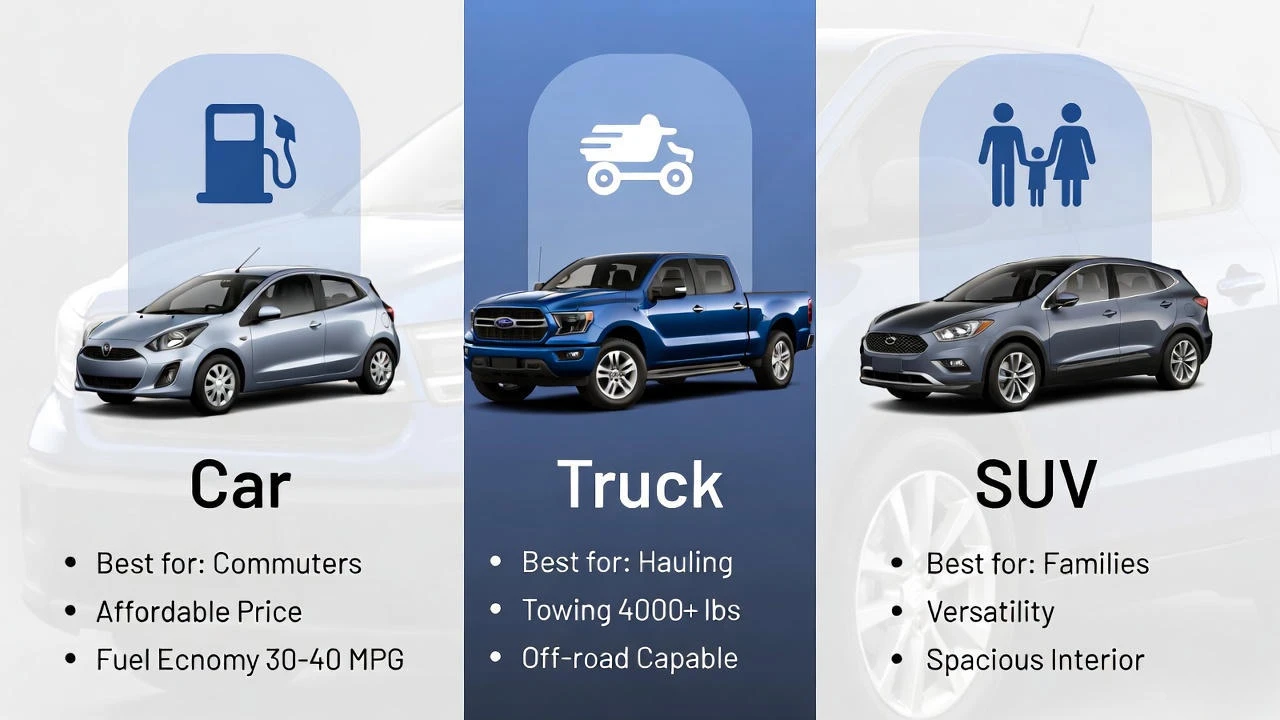
Choosing between a car, truck, or SUV depends on your lifestyle and priorities. Each category offers distinct advantages at different price points.
Understanding these trade-offs helps you make the smartest purchase decision. Your daily needs should drive your choice, not trends or peer pressure.
Choose a Car If You:
- Prioritize fuel economy (30-40+ MPG)
- Drive mostly in cities with limited parking
- Need the absolute lowest purchase price
- Have minimal cargo or passenger needs
- Want the cheapest insurance and maintenance
Best for: Single professionals, retirees, students, daily commuters
Choose a Truck If You:
- Regularly tow trailers or haul cargo
- Work in construction or landscaping
- Enjoy outdoor activities (camping, boating)
- Need bed space for equipment or materials
- Want exceptional resale value
Best for: Contractors, outdoor enthusiasts, rural residents, DIYers
Choose an SUV If You:
- Have a growing family (need 5+ seats)
- Face snowy or rough road conditions
- Want versatility for weekend trips
- Need cargo space without sacrificing comfort
- Balance between car efficiency and truck utility
Best for: Families, suburban drivers, weekend adventurers, pet owners
Cost Comparison Breakdown
| Factor | Cars | Trucks | SUVs |
|---|---|---|---|
| Purchase Price | $17k-$25k | $28k-$35k | $22k-$32k |
| Fuel Economy | 30-40 MPG | 20-25 MPG | 25-30 MPG |
| Insurance | $100-$150/mo | $150-$200/mo | $120-$180/mo |
| Maintenance | Lowest | Moderate | Moderate |
| Resale Value | Good | Excellent | Very Good |
| Cargo Capacity | Limited | Bed: 1,500+ lbs | 25-75 cu ft |
The bottom line: Cars save the most money upfront and long-term. Trucks justify higher costs through capability and resale value.
SUVs offer the best all-around compromise for families. They split the difference between car affordability and truck utility.
If budget is your primary concern, stick with compact cars. If you need utility, the Ford Maverick delivers truck capability at near-car pricing.
For families, the Kia Soul provides SUV space at sedan prices. This makes it an exceptional value for young families on tight budgets.
How Much Do You Actually Save Buying Budget Vehicles?
Choosing an affordable vehicle saves substantial money over the ownership period. These savings compound through lower payments, insurance premiums, and fuel costs.
Smart buyers can save $10,000-$20,000 over five years compared to premium models. This difference can fund vacations, retirement savings, or home improvements.
5-Year Ownership Cost Example
Budget Car (Nissan Versa at $17,140):
- Monthly payment: $280 × 60 = $16,800
- Insurance: $125 × 60 = $7,500
- Fuel (15k miles/year): $1,200 × 5 = $6,000
- Maintenance: ~$3,000
- Total: $33,300
Premium Sedan (Average $35,000):
- Monthly payment: $570 × 60 = $34,200
- Insurance: $180 × 60 = $10,800
- Fuel: $1,800 × 5 = $9,000
- Maintenance: ~$5,000
- Total: $59,000
Savings: $25,700 over 5 years
This difference allows you to invest in other priorities or build savings. The money saved buying a Nissan Versa instead of a BMW 3-Series could fund a down payment on a house.
Remember to account for potential repair costs with older budget models. New budget vehicles with warranties minimize this risk.
Check out best extended car warranty options for added protection beyond manufacturer coverage.
What Hidden Costs Should Budget Vehicle Buyers Avoid?
Budget-conscious buyers often overlook expenses beyond the sticker price. These hidden costs can drain your savings quickly if not planned for.
Awareness helps you budget accurately and avoid financial surprises. Knowledge is power when negotiating with dealerships.
Common Hidden Costs
Dealership Fees: Documentation fees ($300-$700), destination charges ($1,000-$1,500), and dealer prep ($200-$500) add thousands to your out-the-door price. Negotiate these fees or shop dealers with transparent pricing.
Interest Charges: A 72-month loan at 7% APR on a $25,000 car costs $3,200 in interest. Shorter loan terms or better credit saves thousands.
Get pre-approved through credit unions for lower rates. They typically beat dealer financing by 1-2 percentage points.
Registration and Taxes: Sales tax (4-10% depending on state) plus annual registration ($50-$300) can add $1,000-$3,000 to your first-year costs. Budget accordingly based on your state’s requirements.
Maintenance Schedules: Skipping recommended maintenance voids warranties and causes expensive repairs. Budget $500-$1,000 annually for routine service including oil changes, tire rotations, and inspections.
Fuel Type Requirements: Some “budget” vehicles require premium fuel, negating savings. Always check the fuel door before purchasing.
Regular-fuel vehicles save $300-$600 yearly. This adds up to thousands over ownership.
If you’re relocating with your vehicle, consider cheap car shipping options to avoid costly drive-it-yourself expenses.
Should You Buy New or Used Budget Vehicles in 2026?
The new vs used debate centers on trade-offs between price, reliability, and features. Both options offer advantages depending on your financial situation and risk tolerance.
The right choice varies by individual circumstances. Your budget, credit score, and mechanical knowledge all factor into this decision.
New vs Used: Pros and Cons
Benefits of Buying New
- Full manufacturer warranty (3-10 years)
- Latest safety technology and fuel efficiency
- No unknown maintenance history
- Lower interest rates on financing
- Modern features like Apple CarPlay/Android Auto
Benefits of Buying Used
- 30-50% lower purchase price
- Avoid steep first-year depreciation
- More car for your money (luxury brands affordable)
- Lower insurance premiums
- Proven reliability track record
A 3-year-old certified pre-owned vehicle often provides the best value. You avoid the steepest depreciation while still getting warranty coverage and relatively modern features.
Certified programs from Honda, Toyota, and Hyundai offer excellent peace of mind. These typically include 100-point inspections and extended powertrain warranties.
Research thoroughly using best used car websites before purchasing. Get pre-purchase inspections on any used vehicle to avoid costly mistakes.
For online purchases from auctions or distant sellers, explore online car auction sites and budget for shipping costs.
Final Thoughts
Budget vehicles in 2026 offer exceptional value across all categories. Cars provide unbeatable affordability and efficiency at the lowest entry price.
Trucks deliver capability and resale value for those needing utility. SUVs balance space and versatility for growing families.
The cheapest options start around $17,000 for cars, $27,500 for trucks, and $22,000 for SUVs. Choose based on your actual needs rather than wants to maximize savings.
Focus on total ownership costs including insurance, fuel, and maintenance. Research reliability ratings and warranty coverage before purchasing.
Smart shopping saves thousands over your vehicle’s lifetime. Take your time, compare options, and negotiate aggressively for the best deal.
Frequently Asked Questions
What is the absolute cheapest new vehicle you can buy in 2026?
The Nissan Versa starts at $17,140 MSRP, making it the cheapest new car available with a manufacturer warranty and modern safety features.
Are budget vehicles less safe than expensive cars?
Modern budget vehicles include standard safety features like automatic emergency braking and multiple airbags, meeting the same crash test standards as luxury vehicles.
How much should I put down on a budget vehicle?
Aim for 20% down payment to reduce monthly payments and avoid being underwater on your loan if the vehicle depreciates faster than expected.
Can I negotiate the price on budget vehicles?
Yes, budget vehicles typically have $500-$1,500 markup room, research invoice prices and shop multiple dealers to secure the best deal possible.
What’s the best time of year to buy cheap cars?
Late December and September offer the best deals as dealers clear inventory for new model years, holiday sales events also provide excellent negotiating leverage.
Do cheap cars have worse fuel economy than luxury vehicles?
Budget cars often achieve better fuel economy than luxury models due to smaller engines and lighter weight, the Mitsubishi Mirage gets 43 MPG highway.
Should I buy the base trim or upgrade on budget vehicles?
Base trims offer the best value, but mid-trims with safety packages provide worthwhile features without excessive cost, avoid unnecessary luxury options.
How long do budget vehicles typically last?
Modern budget vehicles from brands like Toyota, Honda, and Hyundai routinely exceed 200,000 miles with proper maintenance and care throughout ownership.