
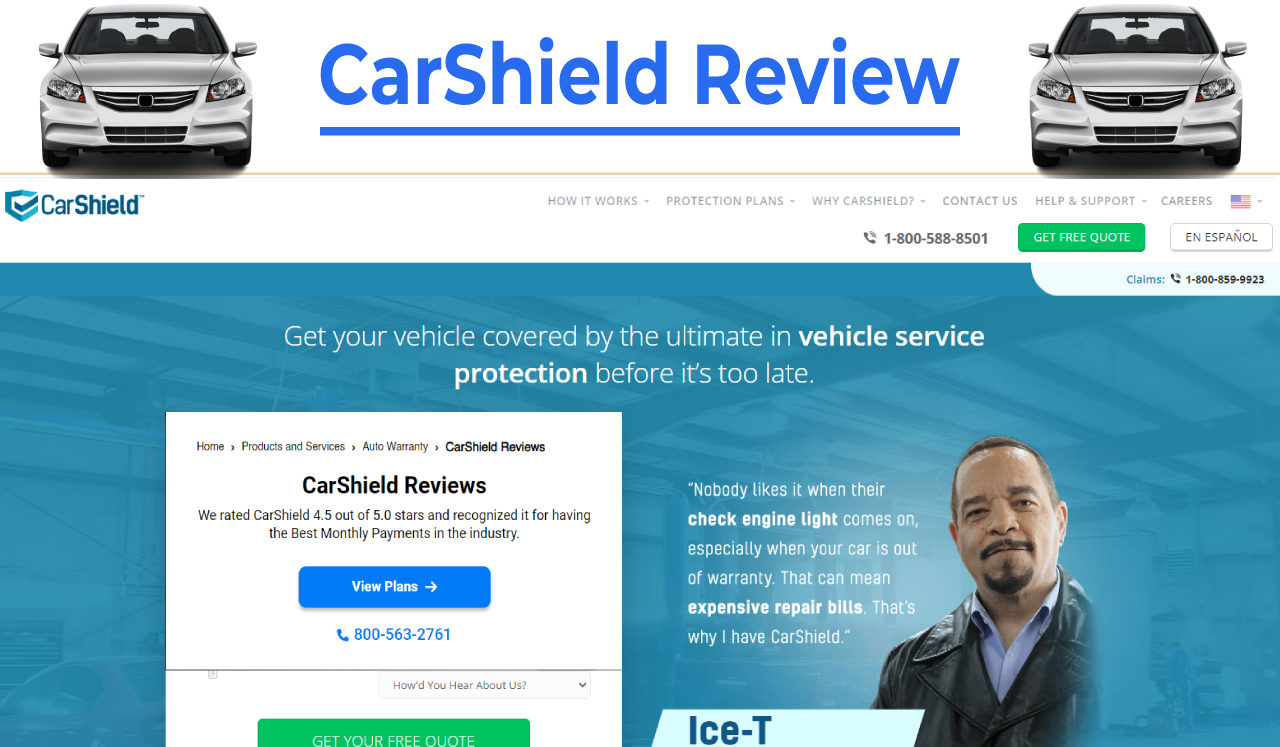
The CarShield cost averages $120-$150 per month for mid-tier coverage with $100 deductibles. Whether this represents good value depends on your vehicle’s reliability, your financial situation, and whether you can navigate the fine print that trips up many customers.
This honest CarShield review cuts through the marketing hype to reveal exactly what you’re paying for, who benefits most, and who should avoid CarShield entirely. You’ll discover real pricing data, common complaints, and whether the coverage justifies the monthly cost.
Quick Verdict: Is CarShield Worth the Money?
Before diving into details, here’s the bottom-line answer to is CarShield any good – it depends entirely on your specific situation.
CarShield IS Worth It If You:
- Own a high-mileage vehicle (100,000-250,000+ miles)
- Can’t afford $3,000-$5,000 emergency repair bills
- Prefer monthly payments ($120-$150) over $2,000+ upfront costs
- Drive an older car out of manufacturer warranty coverage
- Have a vehicle worth $5,000-$15,000 (not worth dumping, but risky)
- Keep detailed maintenance records and receipts
- Will actually read the entire contract thoroughly
- Want flexibility to cancel month-to-month
CarShield Is NOT Worth It If You:
- Have a vehicle with existing mechanical problems (pre-existing condition denials)
- Can easily afford $5,000+ repairs without financial stress
- Own a reliable Honda/Toyota with minimal repair history
- Drive a brand-new vehicle still under factory warranty
- Don’t maintain records or skip recommended maintenance
- Won’t read contract fine print carefully
- Expect true bumper-to-bumper coverage on basic plans
- Plan to sell or trade your vehicle within 1-2 years
The Math Behind the Decision
Here’s the value calculation that determines if CarShield makes financial sense:
What You’ll Pay Over 3 Years:
- Monthly premium: $130 average × 36 months = $4,680
- Deductibles for claims: $100-$200 per repair
- Total investment: approximately $5,000-$5,500
What Major Repairs Cost Without Coverage:
- Transmission replacement: $2,500-$5,000
- Engine repair: $2,000-$4,000
- AC compressor: $800-$1,500
- Power steering system: $500-$1,200
The Break-Even Point: If your vehicle needs approximately $5,000+ in covered repairs over 3 years, CarShield provides value. For unreliable vehicles or luxury brands with expensive parts, you’ll likely exceed this. For reliable economy cars, you may never need it.
CarShield Cost: What Does It Actually Cost?
Understanding CarShield cost determines whether the coverage provides good value for your money. CarShield prices vary significantly based on vehicle age, mileage, make, and coverage level selected.
Average CarShield Cost by Plan Type
| Coverage Plan | Monthly Cost Range | Best For |
|---|---|---|
| Bronze (Powertrain) | $90-$120 | Reliable cars needing catastrophic coverage only |
| Silver | $110-$140 | Moderate-mileage vehicles (80k-120k miles) |
| Gold | $120-$150 | Most popular – balanced coverage and cost |
| Platinum | $130-$160 | High-mileage vehicles with complex systems |
| Diamond | $140-$180 | Near-bumper-to-bumper for unreliable vehicles |
| Administrator | $150-$200 | Maximum coverage for frequent repair needs |
Real Customer Pricing Examples
These actual quotes help you evaluate whether CarShield average cost fits your budget:
2018 Honda Accord (65,000 miles): Gold Plan at $109/month ($1,308 yearly). Value verdict: Questionable for extremely reliable Accords. You might never need $1,300+ in repairs annually.
2015 Ford F-150 (105,000 miles): Platinum Plan at $169/month ($2,028 yearly). Value verdict: Reasonable. F-150s at 100k+ miles often need transmission work ($3,000-$4,000), justifying the coverage.
2013 BMW 5-Series (125,000 miles): Diamond Plan at $189/month ($2,268 yearly). Value verdict: Good value. BMW repairs are notoriously expensive. Single electrical system failure could cost $2,000-$3,000.
Hidden Costs That Reduce Value
The advertised monthly payment doesn’t tell the complete financial story:
Deductibles: Pay $100-$200 every single time you file a claim. Three repairs in one year means $300-$600 out-of-pocket beyond your monthly premiums.
Non-Covered Diagnostic Fees: If your repair gets denied, you still owe the mechanic $100-$150 for inspection and diagnosis work.
Rental Car Costs: Most CarShield plans don’t include rental car reimbursement. Expect $40-$60 daily while your vehicle sits at the shop awaiting claim approval.
CarShield Reviews: What Real Customers Say About Value
Analyzing thousands of CarShield reviews reveals patterns about who finds it worthwhile versus who feels ripped off.
Customer Satisfaction Breakdown
| Review Platform | Rating | Key Insight |
|---|---|---|
| Google Reviews | 4.2/5 stars | Good experiences from customers with covered repairs |
| Trustpilot | 4.0/5 stars | Value depends on claim approval rates |
| Better Business Bureau | 1.3/5 stars (F rating) | Complaints about denials and misleading sales |
| Consumer Affairs | 3.9/5 stars | Mixed – half love it, half regret purchasing |
Who Found CarShield Worth the Money
“Transmission repair saved me $4,000” – Customer paid $130 monthly for 14 months ($1,820 total) before transmission failed. CarShield covered $4,200 repair. Net savings: $2,380. This represents excellent return on investment where one major repair justified entire contract cost.
“Monthly payments fit my budget” – Customer couldn’t afford $2,000 upfront for competitor coverage but managed $125 monthly. CarShield’s payment flexibility made coverage accessible when no other option fit the budget.
“Kept my 200k-mile truck running” – Customer’s high-mileage vehicle was rejected by other warranty companies. CarShield accepted it and covered two major repairs over 18 months, providing value when no alternatives existed.
Who Regretted Buying CarShield
“Paid $1,500 then claim was denied” – Customer paid premiums for 12 months before AC compressor failed. CarShield denied claim saying clutch was a “wear item” not covered. Total loss: $1,500 in premiums plus $1,200 repair cost with zero benefit received.
“Honda never needed repairs anyway” – Customer maintained coverage for 3 years ($4,320 paid) on reliable Honda Accord that never needed major work. While this represents “successful” insurance, customer would have $4,320 in savings if they’d self-insured instead.
“Exclusions made coverage useless” – Customer discovered most actual failures weren’t covered due to fine print exclusions after paying premiums for 8 months. Marketing promises didn’t match contract reality.
CarShield Complaints: Why Some Call It a Waste of Money
Understanding common CarShield complaints reveals why some customers feel coverage wasn’t worth the cost.
Top 3 Complaints That Destroy Value
1. Pre-Existing Condition Denials (40% of negative reviews)
The most frequent complaint involves denied claims labeled as “pre-existing conditions.” CarShield may request maintenance records going back years to prove problems weren’t present at enrollment.
Real Example: “My engine failed 4 months after buying CarShield. They requested maintenance records from the previous 3 years. Because I had one oil change where the mechanic noted ‘minor valve noise,’ they denied my $3,800 engine repair as pre-existing. I’d paid $520 in premiums for nothing.”
Value Impact: Catastrophic – You lose all premiums paid plus still owe full repair costs.
2. Contract Exclusions Strip Coverage Value (35% of complaints)
Customers frequently discover exclusions only when filing claims. The gap between sales promises and contract reality destroys perceived value.
Real Example: “Salesperson said ‘everything mechanical except wear items is covered.’ My power steering rack failed ($950 repair). Denied because power steering fluid leak is a ‘gradual failure’ not a sudden breakdown. The $115/month I paid was worthless.”
Value Impact: Severe – Monthly payments become waste if actual failures aren’t covered due to exclusionary language.
3. Misleading Sales Tactics Oversell Value (25% of complaints)
Aggressive sales representatives make promises not reflected in written contracts, creating unrealistic expectations.
Real Example: “Rep said my 150k-mile BMW would be fully covered, no inspections required. Six months later, major electrical failure denied because ‘high-mileage luxury vehicles require pre-enrollment inspection.’ I never knew that requirement existed.”
Value Impact: Total loss – Paid premiums for coverage that was never actually valid per contract terms.
BBB F Rating: What It Means for Value
The Better Business Bureau gives CarShield an F rating despite resolving many complaints. This rating reflects patterns that impact whether coverage provides genuine value:
- High complaint volume relative to customers served
- Repeated issues with same problems (claim denials, sales tactics)
- Lengthy resolution times (30-90 days for some complaints)
- Not BBB accredited (company chooses not to meet BBB standards)
Does F Rating Mean CarShield Isn’t Worth It? Not necessarily. Many customers receive excellent value despite the rating. However, it indicates higher risk of problems compared to A+ rated competitors.
CarShield vs. Self-Insurance: Which Provides Better Value?
The ultimate question: is CarShield worth it compared to saving money yourself for future repairs?
Self-Insurance Alternative
Instead of paying CarShield $130 monthly, deposit that money into a dedicated car repair savings account:
Year 1: $130 × 12 months = $1,560 saved. If no repairs needed, keep your $1,560. If $1,000 repair needed, pay from savings and keep $560. CarShield customer pays $1,560 in premiums plus $100 deductible = $1,660 total.
Year 3: $130 × 36 months = $4,680 saved. If no repairs needed, keep your $4,680. If two $2,000 repairs needed, pay $4,000 from savings and keep $680. CarShield customer pays $4,680 in premiums plus $200 deductibles = $4,880 total.
Year 5: $130 × 60 months = $7,800 saved. If no repairs needed, keep your $7,800. If $6,000 in repairs needed, pay from savings and keep $1,800. CarShield customer pays $7,800 in premiums plus deductibles = $8,000+ total.
Self-Insurance Provides Better Value If:
- You own reliable Honda, Toyota, or Mazda vehicles
- Your vehicle has minimal repair history
- You can afford unexpected $3,000-$5,000 bills
- You’re disciplined enough to actually save consistently
- Your vehicle is worth under $5,000 (total loss makes repair pointless)
- You plan to trade or sell within 2-3 years
CarShield Provides Better Value If:
- You own unreliable vehicles with expensive repair history
- Luxury European brands (BMW, Mercedes, Audi, Land Rover)
- You absolutely cannot afford major repair emergencies
- You won’t realistically save money consistently
- Your vehicle has 100,000-200,000 miles (high failure risk)
- You need peace of mind more than mathematical optimization
Financial calculations don’t capture the emotional value of worry-free driving. If $130 monthly buys you restful sleep and stress-free commuting, that has real value beyond dollars and cents. However, if claim denials and coverage exclusions create more stress than self-insurance, CarShield’s emotional value becomes negative.
Final Verdict: Is CarShield Worth It?
After analyzing pricing, coverage, customer experiences, and complaints, here’s the honest answer to is CarShield any good:
CarShield Provides Good Value For:
High-Mileage Vehicle Owners (100k-250k miles) – CarShield’s 300,000-mile limit accommodates vehicles other companies reject. At $120-$150 monthly, you’re protected against expensive failures common in high-mileage vehicles.
Budget-Conscious Drivers Without Emergency Savings – Month-to-month payments of $130 prevent financial disaster from $3,000-$5,000 repairs. This beats having no coverage when catastrophe strikes.
Unreliable Vehicle Owners – If your car’s repair history includes multiple $1,000+ fixes, CarShield pays for itself quickly. German luxury brands, older American trucks, and complex crossovers with turbochargers benefit most.
Drivers Wanting Flexibility – No long-term contracts means canceling anytime your situation changes. This flexibility has real value compared to being locked into 36-month prepaid plans.
CarShield Is NOT Worth It For:
Reliable Vehicle Owners – If you drive a Honda Accord, Toyota Camry, or Mazda3 with minimal repair history, you’ll likely pay more in premiums than you’ll ever claim. Self-insurance saves money.
People Who Won’t Read Contracts – If you can’t commit to reading 15-20 pages of fine print, you’ll face surprise claim denials that negate all value. CarShield requires informed consumers.
Short-Term Owners – Planning to sell or trade within 12-18 months? You’ll pay $1,500-$2,000 in premiums with minimal time to recoup value through claims.
Those With Good Emergency Savings – If $5,000 repair bills won’t stress your finances, skip CarShield. Keep your monthly payments and earn interest on savings instead.
The Mathematical Reality
CarShield becomes worthwhile when covered repairs exceed premiums paid. Based on average costs:
Break-even point: One major repair ($3,000-$5,000) within first 2-3 years of coverage
Probability this occurs:
- Reliable vehicles (Honda/Toyota): 15-25% chance
- Average vehicles (Ford/Chevy/Nissan): 35-45% chance
- Unreliable vehicles (Land Rover/BMW/FCA): 60-75% chance
Your vehicle’s reliability determines whether CarShield represents good value or wasted money.
Our Honest Recommendation
For Most People: Self-insurance provides better long-term value if you can commit to saving $130 monthly. You keep money when repairs don’t happen, plus earn interest on savings.
For High-Risk Vehicles: CarShield is absolutely worth it if you own unreliable cars with 100,000+ miles and can’t afford surprise repairs. The monthly cost is justified insurance against financial disaster.
For Budget-Strapped Owners: CarShield’s month-to-month flexibility makes it worthwhile as a temporary safety net until you build emergency savings. Cancel once you have $3,000-$5,000 set aside.
Bottom Line: CarShield isn’t a scam or universally terrible. It provides legitimate value for specific situations while being a poor investment for others. Evaluate your unique circumstances honestly before purchasing.
Frequently Asked Questions
Is CarShield worth the money?
CarShield is worth the money for high-mileage vehicles (100,000+ miles) and owners who can’t afford $3,000-$5,000 emergency repairs, but not worth it for reliable vehicles or those with adequate emergency savings who would benefit more from self-insurance.
How much does CarShield cost per month?
CarShield costs between $100-$200 monthly depending on vehicle age and coverage level, with most customers paying $120-$150 per month for mid-tier Gold or Platinum plans with $100 deductibles.
What is the CarShield average cost?
The CarShield average cost ranges from $120-$150 monthly for comprehensive mid-tier coverage on typical vehicles with 75,000-150,000 miles, totaling approximately $1,500-$1,800 annually plus deductibles for claims filed.
What are common CarShield complaints?
Common CarShield complaints include claim denials for pre-existing conditions, contract exclusions that limit coverage value, misleading sales tactics, slow claim processing causing rental car expenses, and difficulty canceling contracts with continued unwanted billing.
Is CarShield any good compared to competitors?
CarShield is any good for high-mileage coverage up to 300,000 miles and month-to-month flexibility, though competitors like Endurance offer better customer service ratings and CARCHEX provides superior luxury vehicle coverage at higher prices.
Does CarShield have a waiting period?
Yes, CarShield has a waiting period of 30 days or 1,000 miles (whichever comes first) before coverage begins, preventing enrollment immediately before known repairs and protecting against pre-existing condition fraud similar to all extended warranty providers.
Is CarShield better than self-insurance?
CarShield provides better value than self-insurance for unreliable vehicles, high-mileage cars, and owners without emergency savings, while self-insurance saves money long-term for reliable vehicles and those who can afford unexpected repair costs.
Can I cancel CarShield if it’s not worth it?
Yes, CarShield operates month-to-month allowing cancellation anytime without penalties, though refunds only apply within the 30-day money-back guarantee period making it worthwhile to evaluate value during that initial window.