

When it comes to acceleration, the fastest 0-60 car is the Rimac Nevera, hitting 60 mph in just 1.85 seconds. These hypercars combine extreme engineering with street legality, making them the ultimate performance machines you can legally drive on public roads.
This guide ranks the top 10 fastest cars on the planet based on verified top speeds and 0-60 acceleration times. You’ll discover what makes these vehicles so incredibly fast and which models dominate both speed categories.
What Makes a Car the Fastest in the World?
Speed isn’t just about horsepower. The fastest street legal cars combine multiple engineering factors to achieve record-breaking performance.
Understanding these elements helps explain why certain vehicles dominate speed rankings while others fall short despite massive power outputs.
Key Performance Factors
Engine Power and Configuration: The most powerful engines produce 1,500-2,000+ horsepower through advanced turbocharging, supercharging, or electric motors. Quad-turbocharged W16 engines and electric powertrains deliver instant torque that traditional engines cannot match.
Aerodynamic Design: Wind resistance increases exponentially with speed. Every curve, vent, and wing on a hypercar serves to reduce drag coefficient below 0.30 Cd. Active aerodynamics adjust automatically at high speeds to maintain stability and maximize efficiency.
Weight Reduction: Carbon fiber monocoques and lightweight materials keep these vehicles under 3,500 pounds despite powerful drivetrains. Every pound saved translates to faster acceleration and higher top speeds.
Tire Technology: Specially designed Michelin Pilot Sport Cup 2 or similar tires withstand extreme centrifugal forces at 300+ mph. Standard tires would literally explode at these speeds due to heat and stress.
Transmission Systems: Lightning-fast dual-clutch or sequential gearboxes shift in milliseconds. Some electric hypercars eliminate transmissions entirely, delivering power directly to wheels with zero shift lag.
These expensive, high-performance vehicles often require specialized transport when moving between locations. Check our guide on open vs enclosed car shipping to protect your investment during relocation.
Top 10 Fastest Street Legal Cars in the World (2026 Rankings)
These rankings combine verified top speed tests with manufacturer specifications. All vehicles listed are street legal and can be registered for public road use in the United States.
Each entry includes both top speed and 0-60 acceleration times to give you the complete performance picture. Some cars excel at top speed while others dominate acceleration.
| Rank | Car Model | Top Speed | 0-60 MPH | Horsepower |
|---|---|---|---|---|
| 1 | Bugatti Chiron Super Sport 300+ | 304 mph | 2.4 sec | 1,578 hp |
| 2 | Koenigsegg Jesko Absolut | 330 mph* | 2.5 sec | 1,600 hp |
| 3 | SSC Tuatara | 295 mph | 2.5 sec | 1,750 hp |
| 4 | Hennessey Venom F5 | 311 mph* | 2.6 sec | 1,817 hp |
| 5 | Bugatti Bolide | 310 mph* | 2.17 sec | 1,825 hp |
| 6 | Koenigsegg Agera RS | 278 mph | 2.8 sec | 1,341 hp |
| 7 | Rimac Nevera | 258 mph | 1.85 sec | 1,914 hp |
| 8 | Bugatti Chiron | 261 mph | 2.5 sec | 1,479 hp |
| 9 | Czinger 21C | 281 mph* | 1.9 sec | 1,250 hp |
| 10 | Aston Martin Valkyrie | 250 mph | 2.5 sec | 1,160 hp |
Bugatti Chiron Super Sport 300+: The Fastest Car in the World
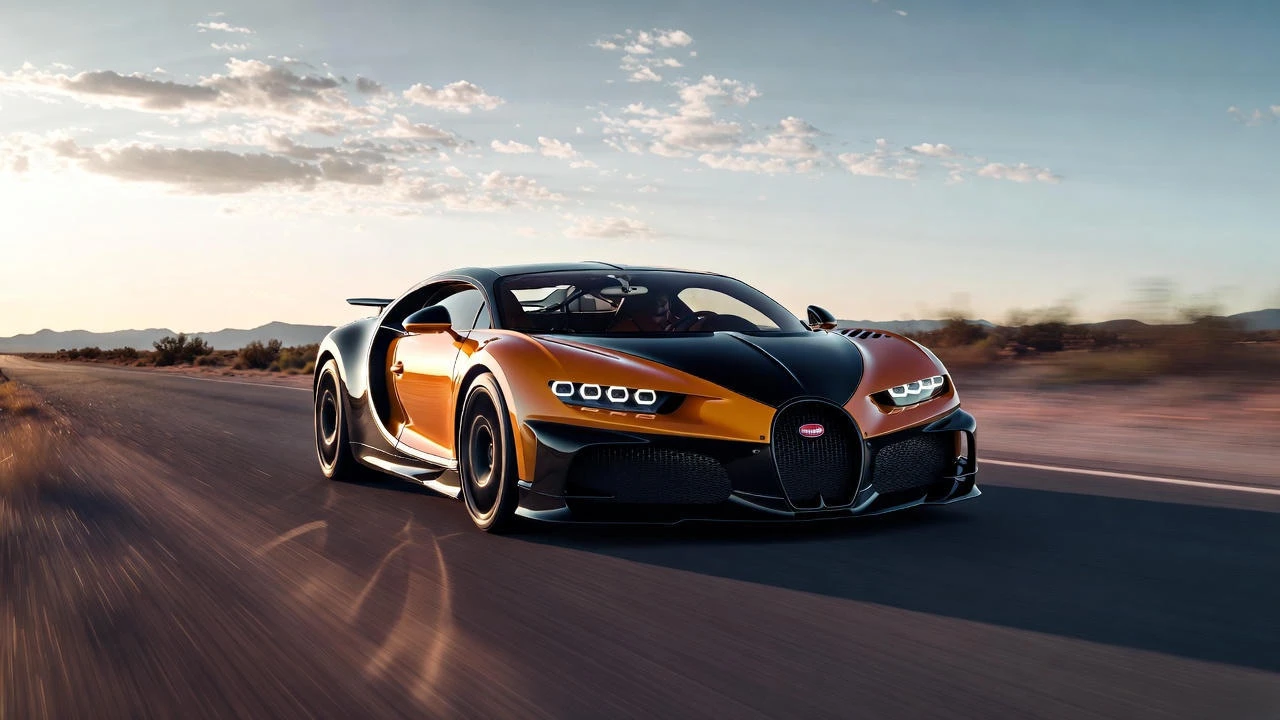
The Bugatti Chiron Super Sport 300+ holds the official record as the fastest car in the world with a verified top speed of 304.773 mph. This achievement was accomplished in August 2019 at Volkswagen’s Ehra-Lessien test track in Germany.
Professional racing driver Andy Wallace piloted the modified Chiron to break the 300 mph barrier. The run was independently verified and certified, making it the first production-based car to officially exceed 300 mph.
Engineering Excellence
The quad-turbocharged 8.0-liter W16 engine produces an astronomical 1,578 horsepower at 6,700 rpm. Four turbochargers force-feed air into the massive 16-cylinder engine configuration, creating relentless power across the entire RPM range.
An elongated rear end reduces drag by 25% compared to the standard Chiron. The streamlined bodywork and optimized underbody aerodynamics allow the car to slice through air with minimal resistance.
Only 30 units were produced, each priced at approximately $5.2 million. Every example sold before production even began, demonstrating the extreme demand for the world’s ultimate speed machine.
Koenigsegg Jesko Absolut: The Second Fastest Car in the World
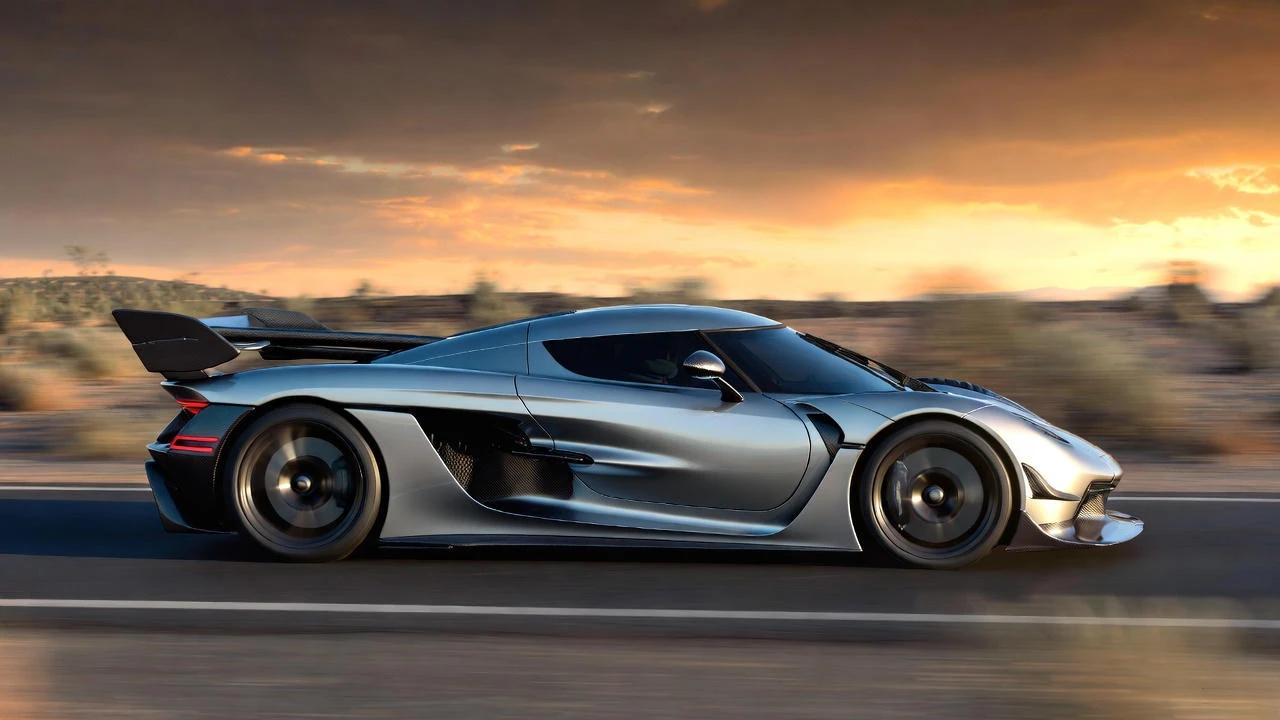
The world’s second fastest car (theoretically) is the Koenigsegg Jesko Absolut, with a projected top speed of 330 mph. This Swedish hypercar hasn’t been officially tested at maximum velocity yet, but aerodynamic simulations suggest it could exceed the Chiron’s record.
Unlike the Chiron Super Sport 300+, the Jesko Absolut removes all active aerodynamic elements. It features the lowest drag coefficient of any Koenigsegg ever built at just 0.278 Cd.
Revolutionary Technology
The twin-turbocharged 5.0-liter V8 engine produces 1,600 horsepower on E85 biofuel. The Light Speed Transmission (LST) represents the most advanced gearbox ever fitted to a production car, executing gear changes in virtually zero time.
Koenigsegg’s proprietary carbon fiber construction keeps weight at just 3,064 pounds. This incredible power-to-weight ratio enables explosive acceleration alongside theoretical top speed dominance.
Production is limited to 125 units total, split between the high-downforce Attack model and the low-drag Absolut version. Pricing starts around $3 million before customization options.
Rimac Nevera: The Fastest 0-60 Car in the World
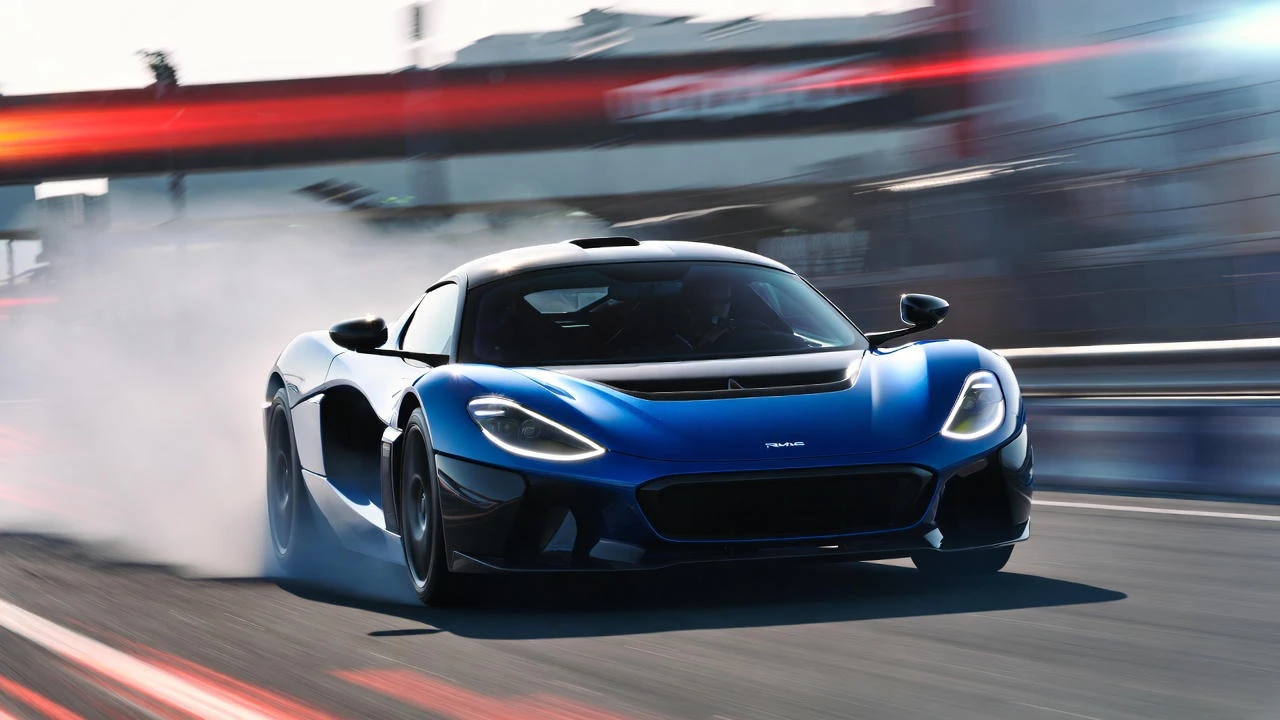
While top speed captures headlines, acceleration matters more for real-world driving. The Croatian-built Rimac Nevera claims the title of fastest car in the world from 0 to 60 mph with a time of just 1.85 seconds.
This all-electric hypercar demolishes combustion-powered competitors in straight-line acceleration. Four independent electric motors deliver 1,914 combined horsepower with instant torque availability.
Electric Performance Dominance
Unlike gas engines that require turbo spool-up time, electric motors deliver maximum torque instantaneously. This fundamental advantage allows the Nevera to rocket from standstill to highway speeds faster than any combustion car.
The 120 kWh battery pack provides enough charge for 340 miles of range despite the incredible performance. Advanced thermal management prevents battery overheating during repeated acceleration runs.
All-wheel drive torque vectoring distributes power individually to each wheel 100 times per second. This computer-controlled system maximizes traction in all conditions, enabling consistent sub-2-second 0-60 launches.
Only 150 units will be produced at approximately $2.4 million each. The Nevera represents the future of hypercar performance where electric powertrains dominate traditional engines.
American Speed: SSC Tuatara and Hennessey Venom F5
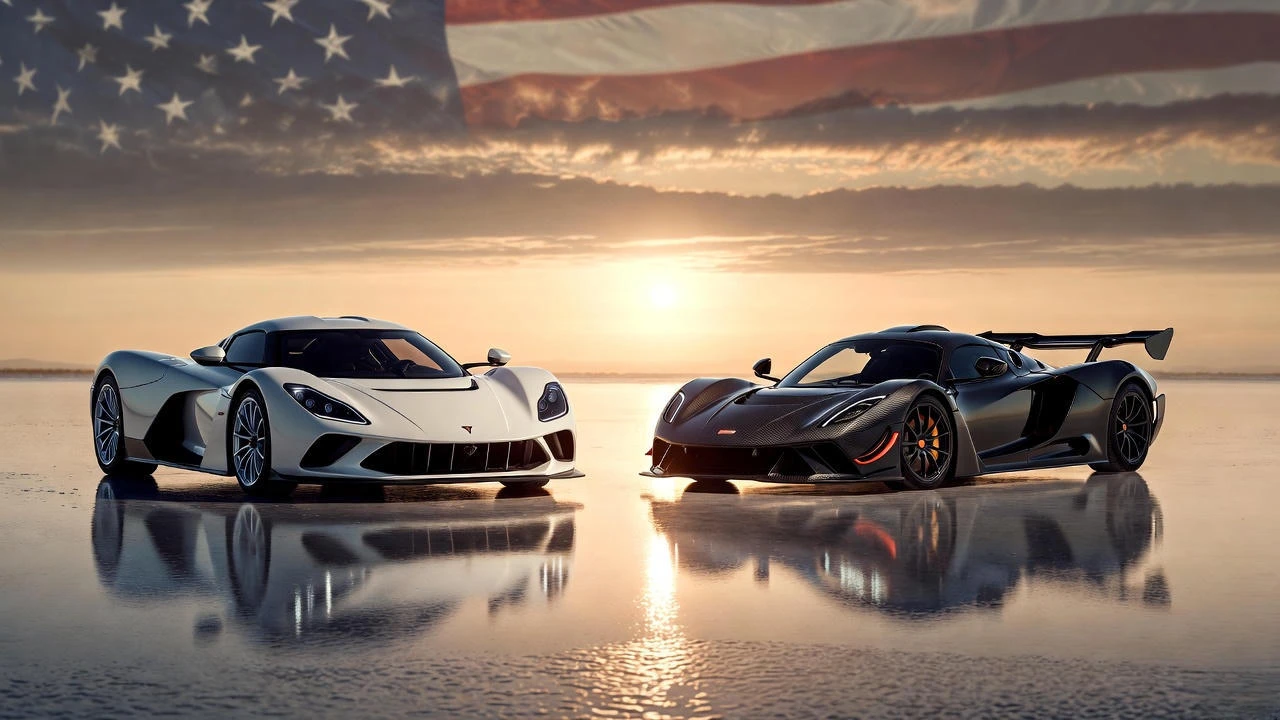
American manufacturers prove they can compete with European hypercar royalty. Two U.S.-built machines crack the top 10 fastest cars on the planet with legitimate 290+ mph capabilities.
SSC Tuatara
The SSC Tuatara achieved a verified 295 mph average in October 2021 in Nevada. Controversy initially surrounded earlier speed claims, but independent GPS verification confirmed this exceptional performance.
Its 5.9-liter twin-turbo V8 produces 1,750 horsepower on E85 fuel. The carbon fiber monocoque chassis weighs just 2,750 pounds (without fluids), creating an otherworldly power-to-weight ratio.
A drag coefficient of 0.279 rivals the most aerodynamic cars ever built. Every surface angle optimizes airflow, from the teardrop cabin to the aggressive rear diffuser.
Hennessey Venom F5
Texas-based Hennessey Performance Engineering claims the Venom F5 will exceed 311 mph based on wind tunnel testing and simulations. Official verification attempts continue as the company seeks suitable testing locations.
The “Fury” twin-turbo V8 displaces 6.6 liters and generates 1,817 horsepower. This bespoke engine was designed specifically for extreme high-speed performance with reinforced internals throughout.
Total vehicle weight sits at 3,053 pounds thanks to extensive carbon fiber construction. Limited production of just 24 units ensures exclusivity, with pricing around $2.1 million.
How Fast Can Electric Hypercars Really Go?
Electric vehicles are revolutionizing the hypercar segment with instant torque and incredible acceleration. However, top speed remains a challenge for EVs compared to combustion engines.
The fastest electric car currently is the Rimac Nevera at 258 mph. While this is impressive, it falls short of the fastest gas-powered hypercars by 40-50 mph.
Why EVs Struggle with Top Speed
Battery Thermal Limits: Sustained high-speed running generates enormous heat. Battery packs must be cooled aggressively to prevent thermal runaway and damage.
Motor RPM Limits: Electric motors become inefficient at extreme rotational speeds. Most EVs hit top speed at around 12,000-15,000 motor RPM, limiting maximum velocity.
Single-Speed Transmissions: Most EVs use single-speed gearboxes optimized for acceleration. Multi-speed transmissions could increase top speed but add weight and complexity.
Aerodynamic Drag: At 250+ mph, aerodynamic drag increases exponentially. The power required to overcome wind resistance at 300 mph is massive, draining batteries rapidly.
Electric Advantages in Acceleration
While EVs may not dominate top speed, they absolutely rule 0-60 acceleration. The fastest 0-60 car is electric, and the top 5 quickest-accelerating vehicles are all EVs.
Instant torque delivery eliminates turbo lag entirely. There’s no waiting for boost pressure or downshifting – maximum acceleration is available immediately from any speed.
Computer-controlled torque vectoring distributes power perfectly to each wheel. This prevents wheelspin and maximizes traction in ways mechanical systems cannot replicate.
What About Affordability? Fastest Cars Under $500K
Not everyone can afford multi-million dollar hypercars. Several manufacturers offer extreme performance at relatively accessible price points.
These vehicles won’t crack the absolute top speed records, but they deliver thrilling performance that few drivers will ever fully exploit on public roads.
High-Performance Options
Chevrolet Corvette Z06: Starting at $106,395, the Z06 hits 60 mph in 2.6 seconds with its 670-hp flat-plane-crank V8. Top speed reaches 186 mph, making it the fastest American production car under $150,000.
Porsche 911 Turbo S: At $207,000, this German icon achieves 2.2-second 0-60 times with launch control engaged. The twin-turbo flat-six produces 640 horsepower with legendary reliability.
McLaren 765LT: Priced around $382,500, this British supercar reaches 60 mph in 2.7 seconds and tops out at 205 mph. Carbon fiber construction and active aerodynamics define its character.
Ferrari SF90 Stradale: Starting at $507,300, it technically exceeds our budget but deserves mention. Its plug-in hybrid system generates 986 horsepower for 2.5-second 0-60 sprints.
Even these “affordable” supercars require professional transport services. Our guide on best car shipping companies helps you find reliable carriers for high-value vehicles.
The Future of Speed: What’s Next for Hypercars?
Automotive engineers continue pushing boundaries with each new model year. Several manufacturers have announced next-generation hypercars targeting even more extreme performance.
Hybrid powertrains combining combustion engines with electric motors will dominate upcoming releases. This technology delivers the best of both worlds – instant electric torque plus high-RPM gas engine power.
Upcoming Speed Machines
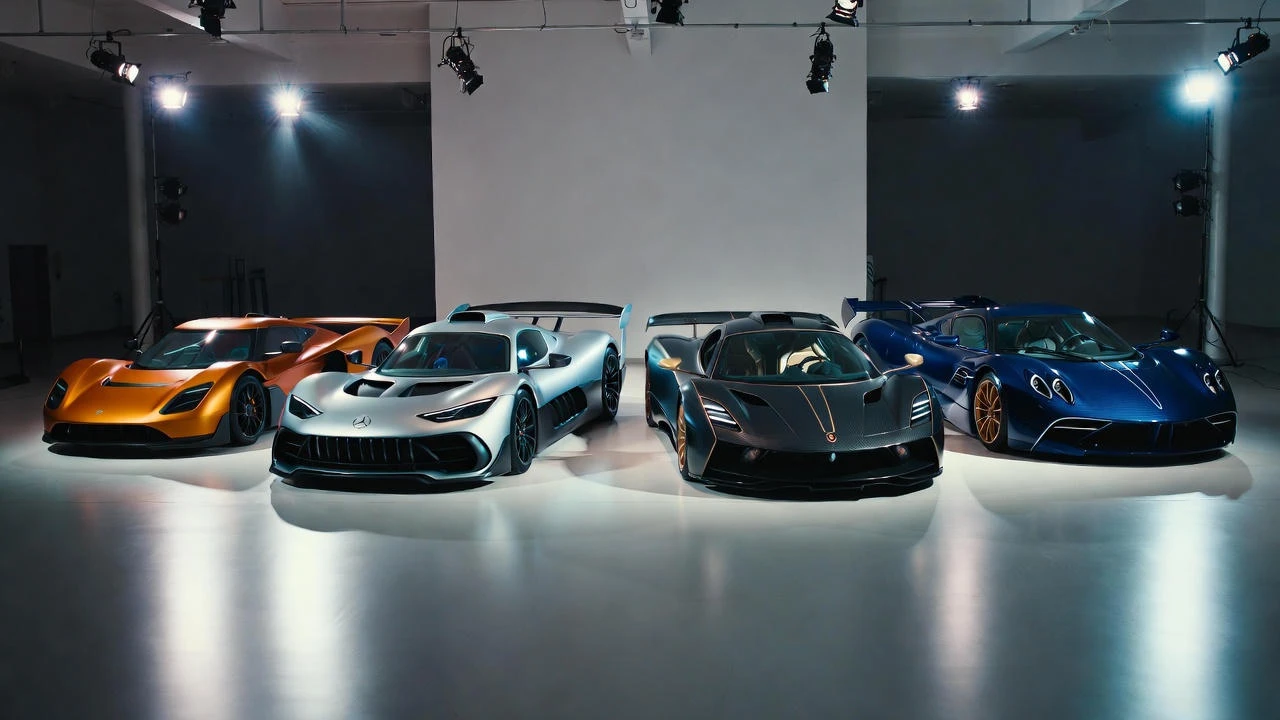
Gordon Murray T.50: The successor to the legendary McLaren F1 features a naturally aspirated V12 that revs to 12,100 RPM. Its fan-based ground effect system creates massive downforce without traditional wings.
Mercedes-AMG One: Formula 1 hybrid technology adapted for the street. This plug-in hybrid combines a 1.6-liter turbocharged V6 with four electric motors for 1,063 total horsepower.
Lotus Evija: British manufacturer Lotus targets 200 mph in under 9 seconds with its all-electric hypercar. Four motors generate 2,011 combined horsepower in a package weighing just 3,704 pounds.
Pagani Utopia: The Italian exotic car maker’s latest creation uses a Mercedes-AMG twin-turbo V12 producing 864 horsepower. Manual transmission availability appeals to driving purists.
Active aerodynamics will become increasingly sophisticated. Computer-controlled wings, vents, and diffusers will adjust hundreds of times per second to optimize downforce and minimize drag.
Sustainable fuel development allows combustion engines to continue evolving. Synthetic e-fuels and advanced biofuels could enable traditional engines to survive increasingly strict emissions regulations.
Final Thoughts
The fastest street legal cars in 2026 represent the pinnacle of automotive engineering. These machines combine multi-million dollar price tags with performance that defies physics.
Top speed records continue falling as manufacturers compete for bragging rights. The Bugatti Chiron Super Sport 300+ currently holds the crown at 304 mph, but the Koenigsegg Jesko Absolut threatens to dethrone it.
Electric vehicles dominate acceleration metrics with the Rimac Nevera achieving sub-2-second 0-60 times. However, combustion-powered cars still reign supreme for outright top speed capabilities.
Whether you prioritize top speed or acceleration, these hypercars deliver performance that exceeds what any driver can safely use on public roads. They exist as rolling works of art and engineering showcases rather than practical transportation.
If you’re fortunate enough to own one of these incredible machines, professional enclosed transport protects your investment during relocation. Check our state-by-state shipping guide to find qualified carriers in your area.
Frequently Asked Questions
What is the fastest car in the world?
The Bugatti Chiron Super Sport 300+ is the fastest car in the world with a verified top speed of 304.773 mph, achieved in August 2019 at Volkswagen’s Ehra-Lessien test track in Germany.
What is the second fastest car in the world?
The Koenigsegg Jesko Absolut is theoretically the second fastest car with a projected top speed of 330 mph, though this hasn’t been officially verified yet through independent testing.
What is the fastest 0-60 car in the world?
The Rimac Nevera is the fastest 0-60 car in the world, achieving 60 mph from a standstill in just 1.85 seconds thanks to its four electric motors producing 1,914 combined horsepower.
Are these cars street legal in the United States?
Yes, all cars listed in this guide are street legal and can be registered for public road use in the United States, though some may require modifications to meet specific state emissions or safety regulations.
How much does it cost to ship a hypercar?
Enclosed transport for hypercars typically costs $2,000-$5,000+ for cross-country shipping, depending on distance and special requirements like climate control or single-car dedicated trailers.
Why can’t electric cars match gas cars for top speed?
Electric motors become inefficient at extreme RPMs and battery thermal management becomes challenging at sustained high speeds, limiting EVs to around 250-260 mph compared to 300+ mph for combustion engines.
What’s the fastest production car under $200,000?
The Chevrolet Corvette Z06 is the fastest production car under $200,000, achieving 0-60 mph in 2.6 seconds and a top speed of 186 mph with a starting price of $106,395.
How many Bugatti Chiron Super Sport 300+ were made?
Only 30 units of the Bugatti Chiron Super Sport 300+ were produced, each priced at approximately $5.2 million, and all examples sold out before production began.